
Library Collaborates with Experts to Use AI to Explore Mexico’s Indigenous Cultural Heritage
Guest post by Dr Joshua Fitzgerald, former Munby Fellow in Bibliography (Cambridge University Library & St John’s College Cambridge).
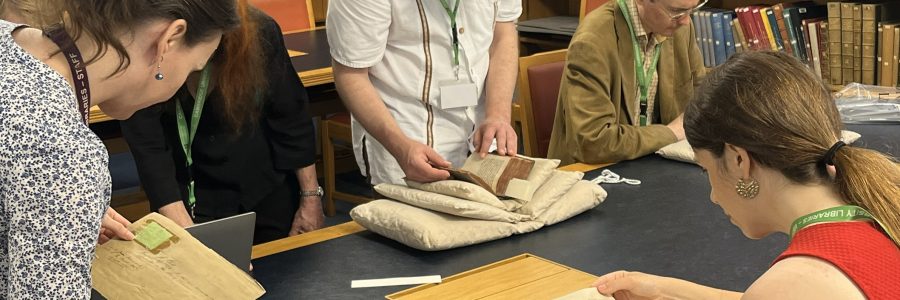
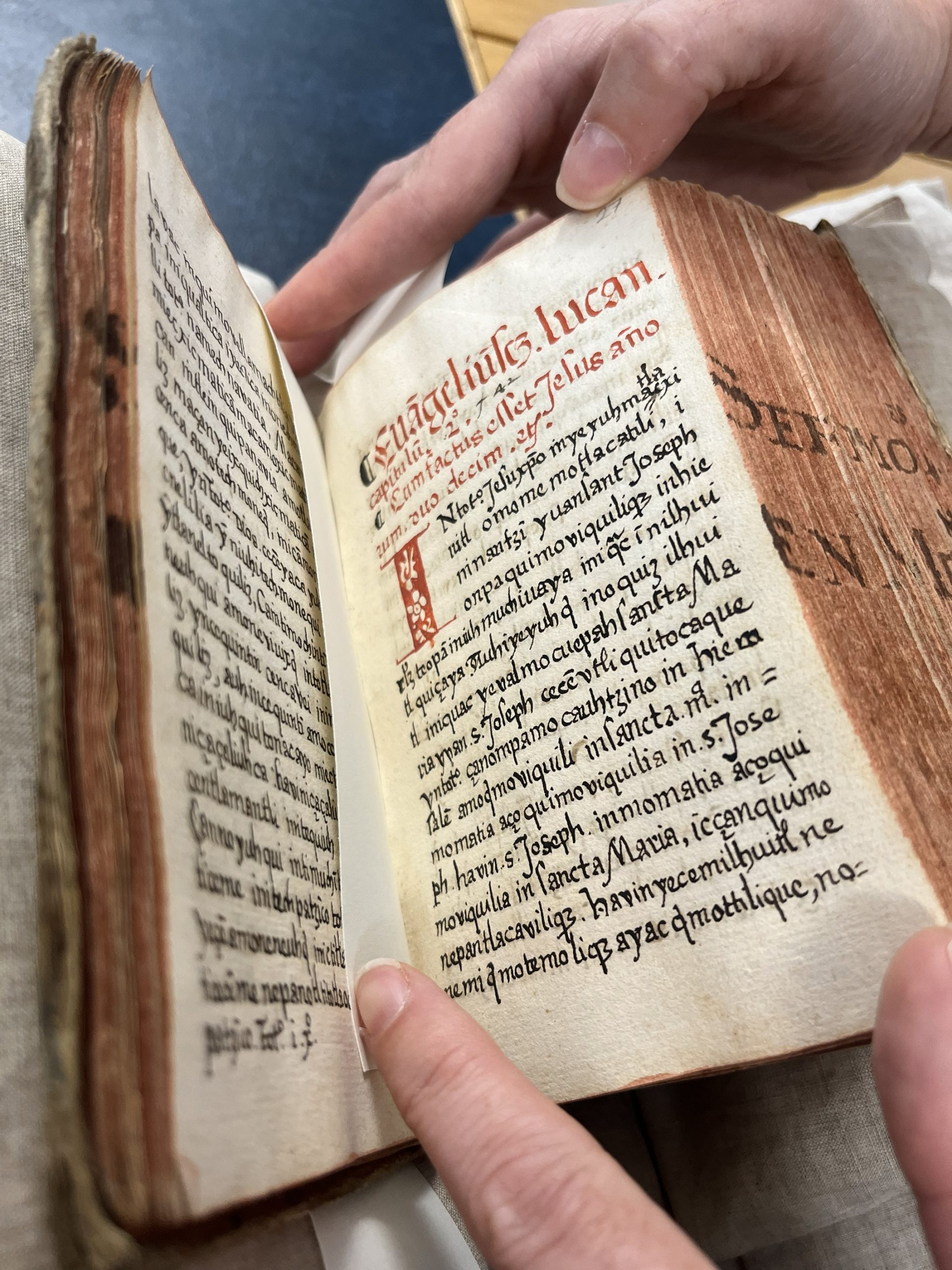
How is the future of AI shaping and being shaped by indigenous languages collections in the UK? On 17-18 July 2025, experts met at Cambridge University Library to address this question, by exploring how AI can empower new research in cultural heritage material in Nahuatl (commonly ‘Aztec’). The workshop used three items from the Library’s Bible Society collection as a test case: a handwritten sixteenth-century Nahuatl-Latin lectionary (Bible Society MS 375); and two handwritten copies of the Gospel of St Luke from the nineteenth century (Bible Society MS 376 and 377).
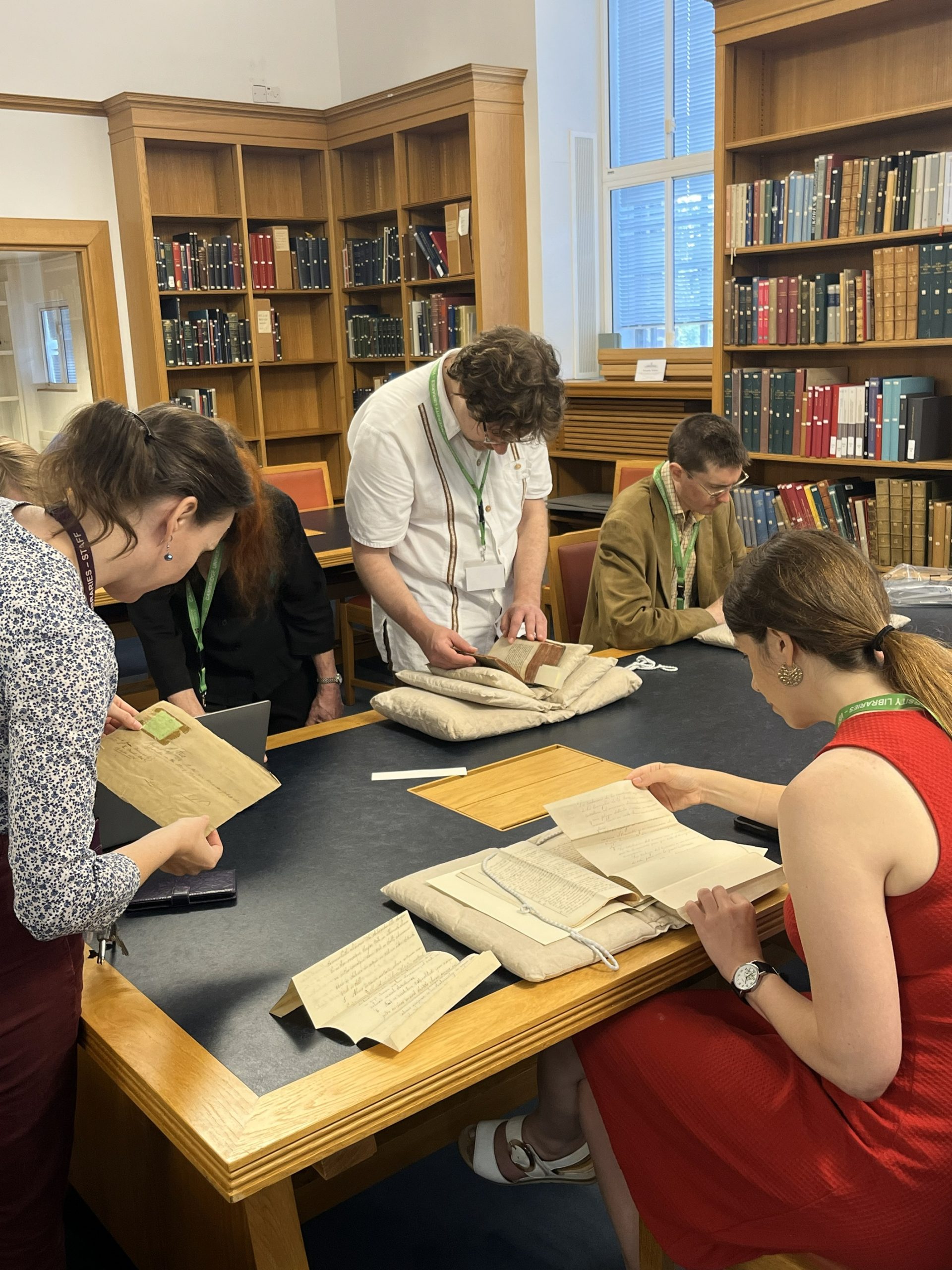
The event, ‘AI and Nahuatl Heritage Material: Challenges and Opportunities’, was convened by members of the AI for Cultural Heritage Hub (ArCH) project, including Amelie Roper (Project Co-Lead), Suzanne Paul (Keeper of Rare Books and Early Manuscripts), Valentina Bertolani (Research Development Adviser) and Joshua Fitzgerald (Munby Fellow in Bibliography). Its focus on Nahuatl language collections created a capstone event for Joshua’s Munby Fellowship in Bibliography project. Disciplinary backgrounds of the invitees included ethnolinguistics, history, archaeology, art history, and collections research, who had travelled from Oxford, London, Scotland, Poland and Mexico.
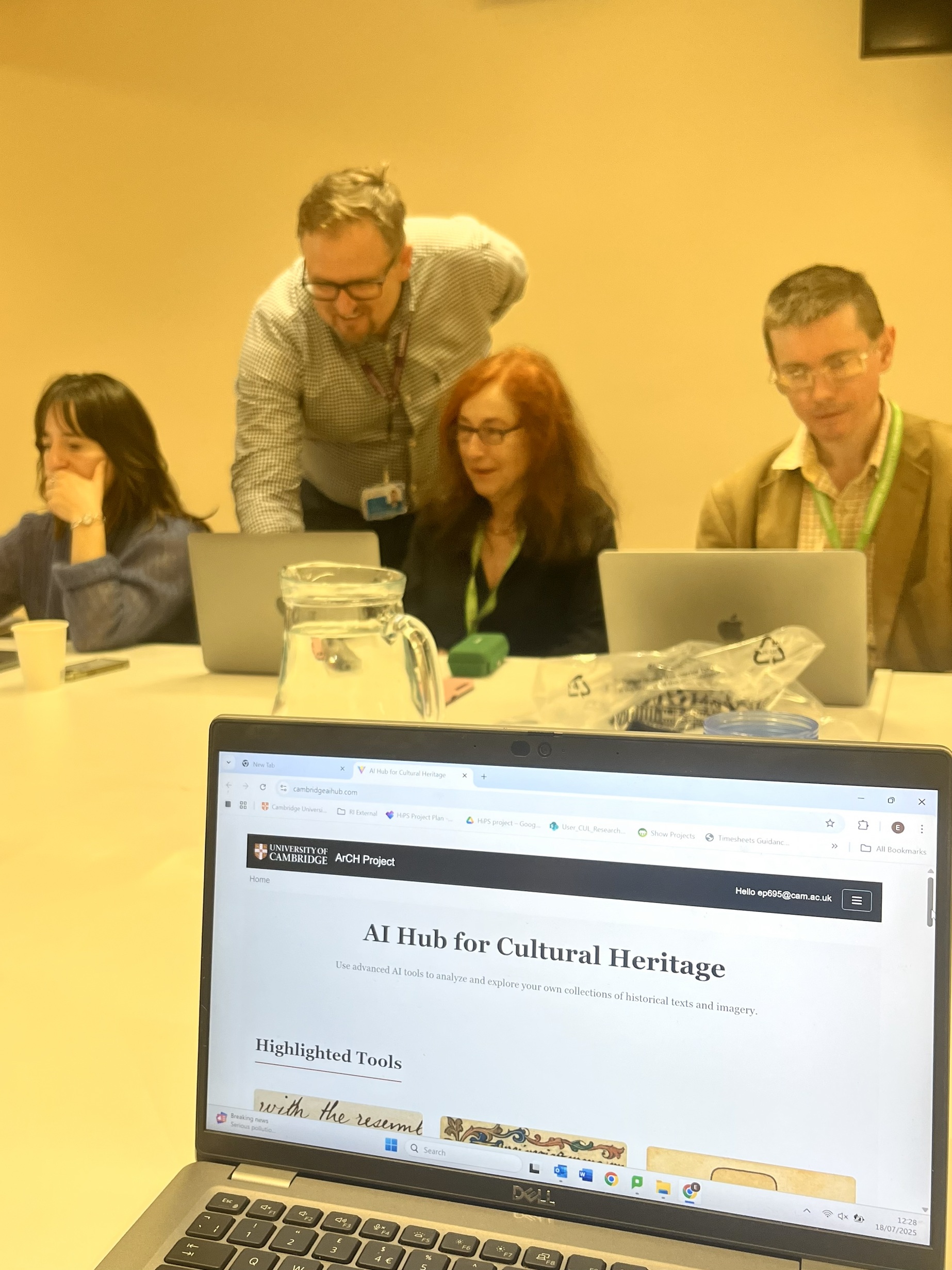
Over 14 months (February 2025 to March 2026), the ArCH project is using Cambridge’s distributed network of collections to create a secure workspace (the “hub”) and a Community of Practice to empower non-technical users (cultural heritage practitioners and academics) to analyse cultural heritage data securely with AI tools. Tuan Pham and Jennie Fletcher from the Library’s Digital Initiatives Team have been working with collections experts and academics to develop a prototype hub. The project is funded by ai@cam and the Accelerate Programme for Scientific Discovery, made possible by a donation from Schmidt Sciences.
Attendees were given advanced access to the hub to enable them to test it on their own use cases. The project team gathered feedback on its functionality through collaborative discussion to better understand AI’s applicability to Nahuatl Studies. Participants enjoyed a hands-on walk through the hub’s tools from Lead Developer Jennie Fletcher, a how-to on training computer neural networks to improve visual analysis by PhD student Wallace Peaslee (University of Cambridge Image Analysis Group), and an exploration of the history of Mesoamerican indigenous colour vocabularies by specialist Élodie Dupey Garcia (Universidad Nacional Autónoma de México).
The group also reflected on topics including the potential for AI to both increase productivity and hinder it; improving source community collaborations in the development of bespoke tools; empowering critical translations with advanced handwritten/painted character recognition; the forays and foibles of using Large Language Models; the limitations of computer vision and traditional classification approaches; and AI-assisted researcher collaborations via chat.
If you would like to follow the work of the AI for Cultural Heritage Hub project, please join the ArCH mailing list.