
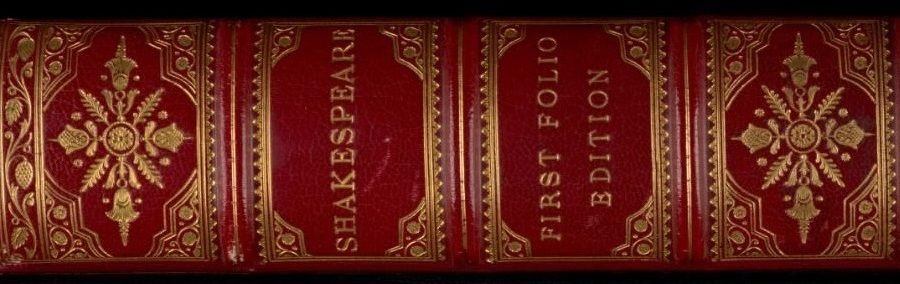
Shakespeare’s First Folio conserved
The University Library is very lucky to have copies of all four Shakespeare folios printed in the seventeenth century (1623, 1632, 1664 & 1685). The 1685 fourth folio came to us in 1715 with the books of John Moore, Bishop of Ely, and the first, second and third were bequeathed to us in 1894 by Samuel Sandars, a graduate of Trinity College and collector of early English literature and fine bindings. Sandars is commemorated annually in the readership in bibliography which he endowed. Although not rare in terms of surviving copies (about 230 are recorded), the first folio has long been an iconic book. It contains the earliest surviving texts of some of Shakespeare’s plays and is consequently coveted by collectors. The early history of our copy is not known; its first recorded owner was Nathaniel Philip Simes of Stroud Park, Horsham, by whom it was acquired c. 1850. The present binding, by Francis Bedford, seems likely to have been done for Simes, since Bedford died three years before the sale of Simes’s library.
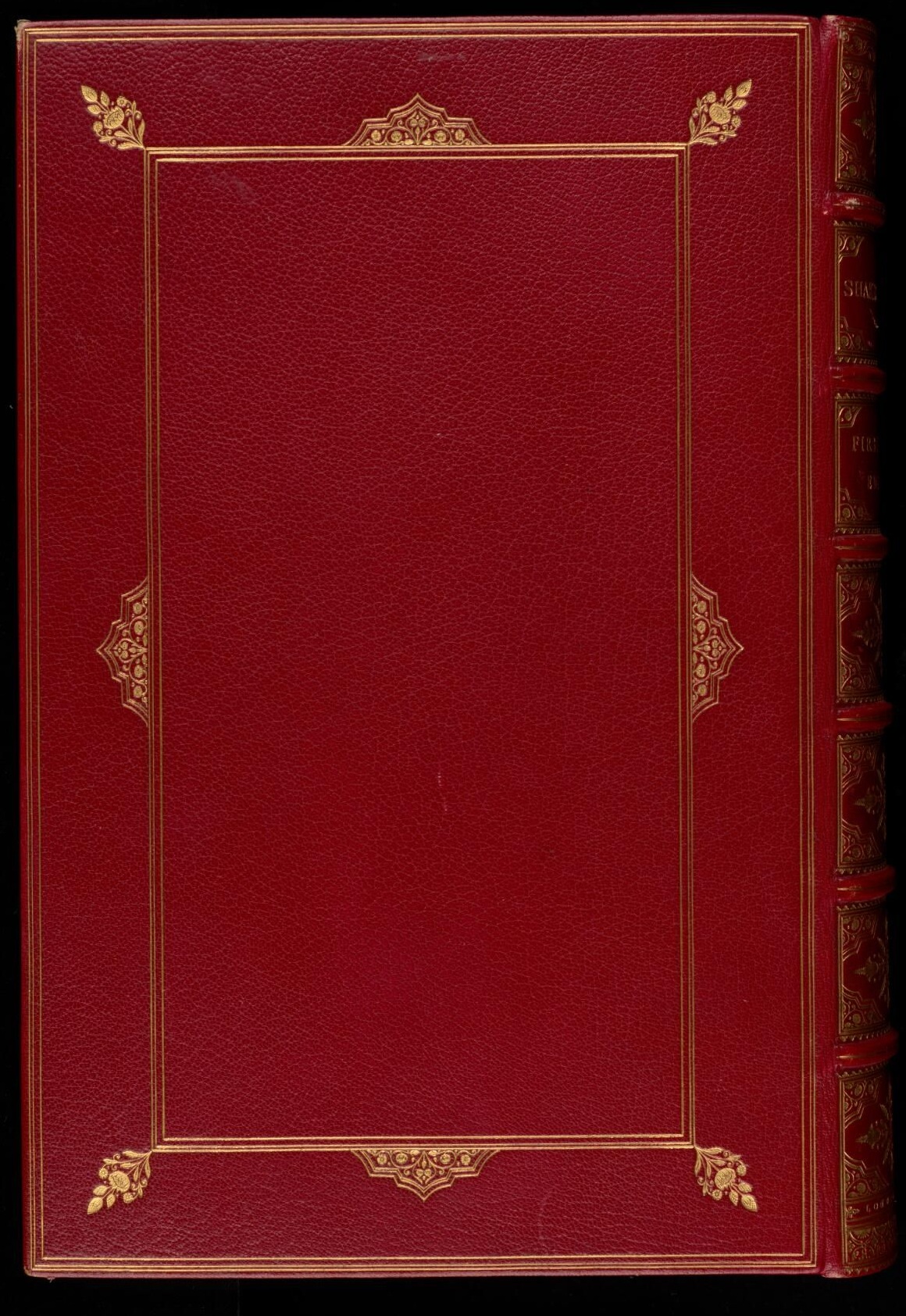
It was sold at the auction of Simes’s library (at Sotheby’s on 8 July 1886, lot 1607) and bought by the bookseller Gilbert Ellis, who sold it to Sandars. A letter from Ellis to Sandars shortly after the sale (dated 17 July: CUL MS Add.4251/413) notes that Ellis had assumed the volume to be in poor condition, missing a number of leaves, as it was offered for sale ‘not subject to return’. But he was surprised to buy it for just £81: ‘the book was really cheap … and [I] can promise you to make a very respectable volume of it, if you will let me take the matter in hand’. His desire to ‘make a very respectable volume of it’ meant that work was required to replace the verses by Ben Jonson which face the title page (lacking entirely), and repairing the lower portion of the title page, which was torn. Ellis had the verses and the lower portion of the title page reproduced in ink facsimile. The extend of the title leaf repairs can better be seen by viewing the verso of the leaf online.
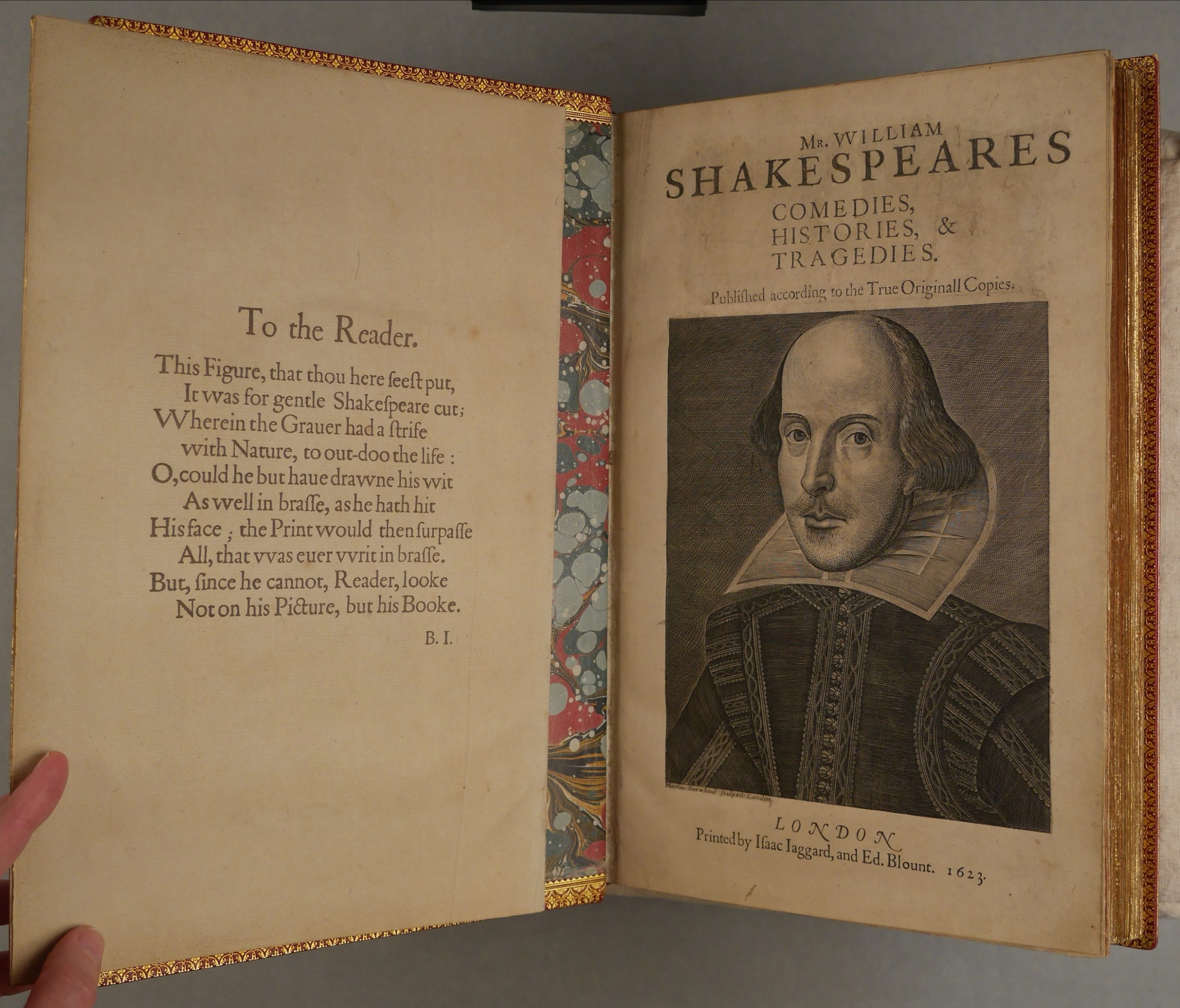
Our copy has in the past frequently been brought out for visitors and displayed at the famous first opening, where Shakespeare’s engraved portrait faces the title page. This led to a weakening of the binding structure, and consequently in recent years the first gathering of leaves and the nineteenth-century marbled paper endleaves have come loose from the binding. In December the book went to our conservation studio for the leaves to be re-attached, and for some small paper repairs to be made at other places within the volume. Deborah Farndell, Senior Conservator, worked on the book, checking its condition throughout before beginning her work. What follows is based on her Condition & Treatment Report.
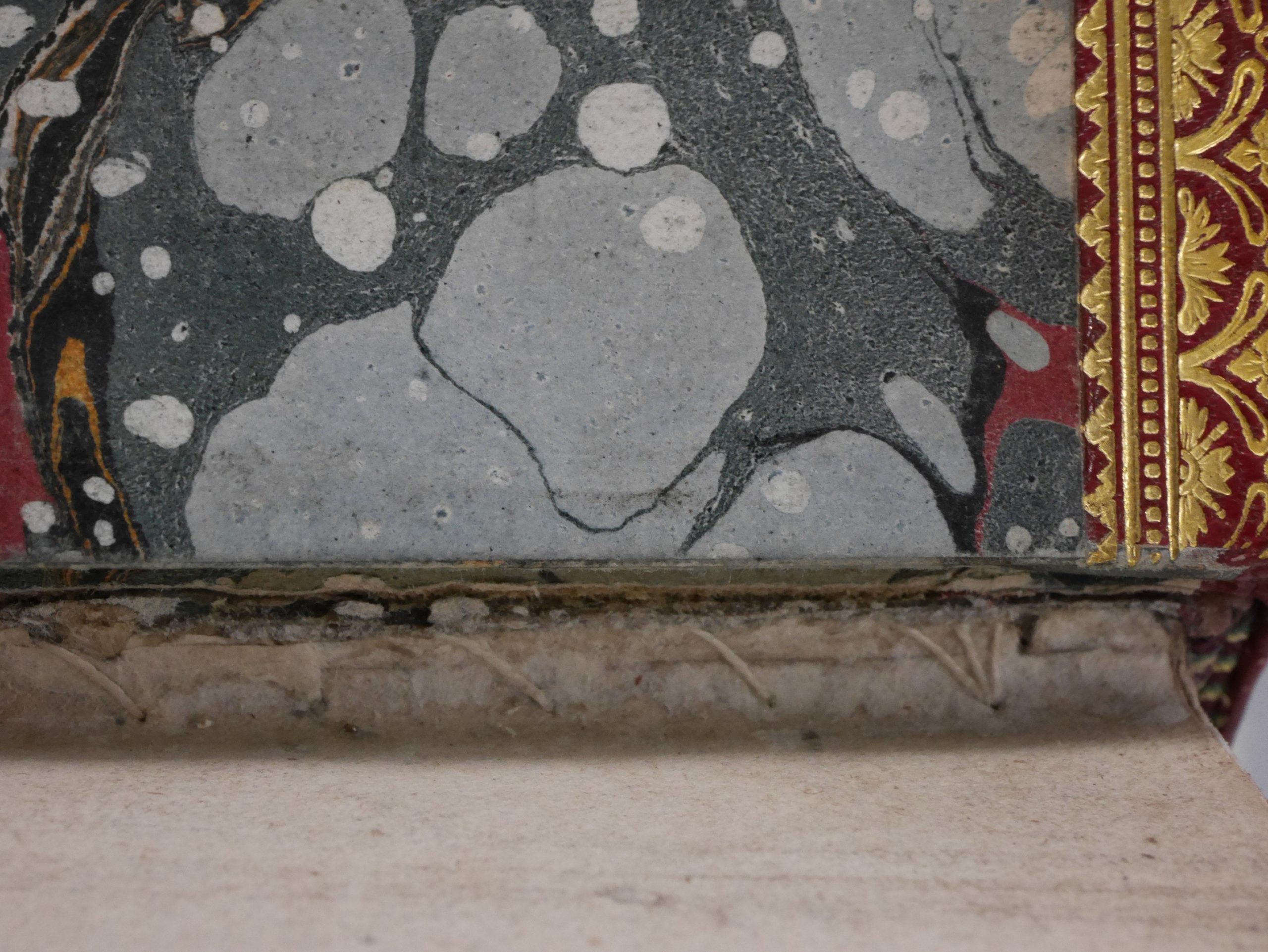
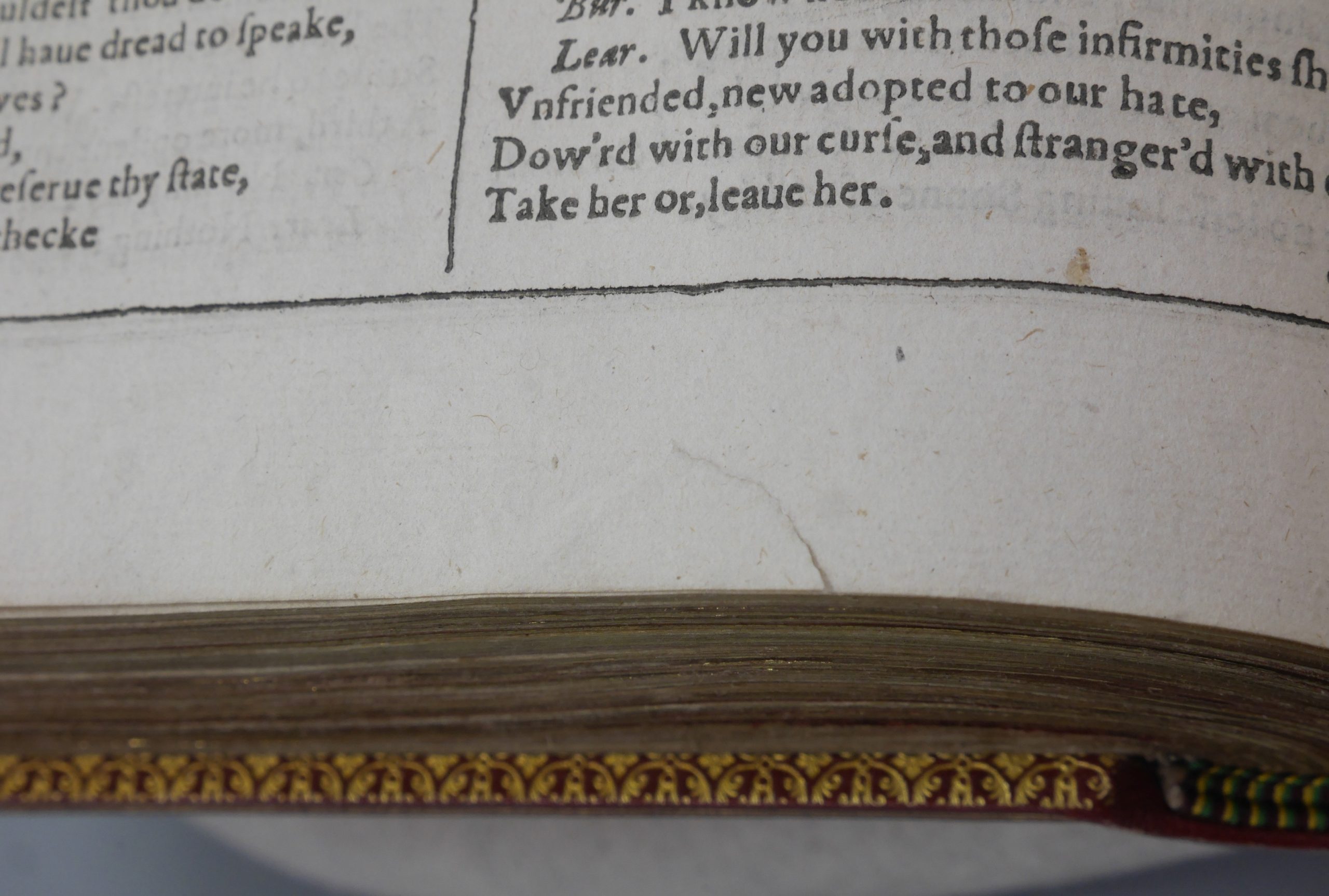
The book is in generally good condition. There are a few small scuffs to the edges, spine and corners of the leather and although the nineteenth-century binding looks good it does not allow the book to open very well (but this is not causing damage). The first marbled paper flyleaf, following two paper flyleaves and the first text leaf, “To the reader”, are all fully detached. In this copy the verse “To the reader” is in manuscript facsimile and parts of the title page itself (primarily the imprint giving the printers’ names and date) are also in facsimile. The first eight leaves do not sit well with the rest of the text block, and some leaves protrude from the textblock making them vulnerable, especially in the tail edge of the catalogue leaf. There has been extensive repair and retouching to the title leaf, especially the margin around the portrait of Shakespeare. Some leaves have small tears, along with some rust spots, stains, surface deposits, ink blots and small holes (some repaired) throughout the text block, although these are not of concern.
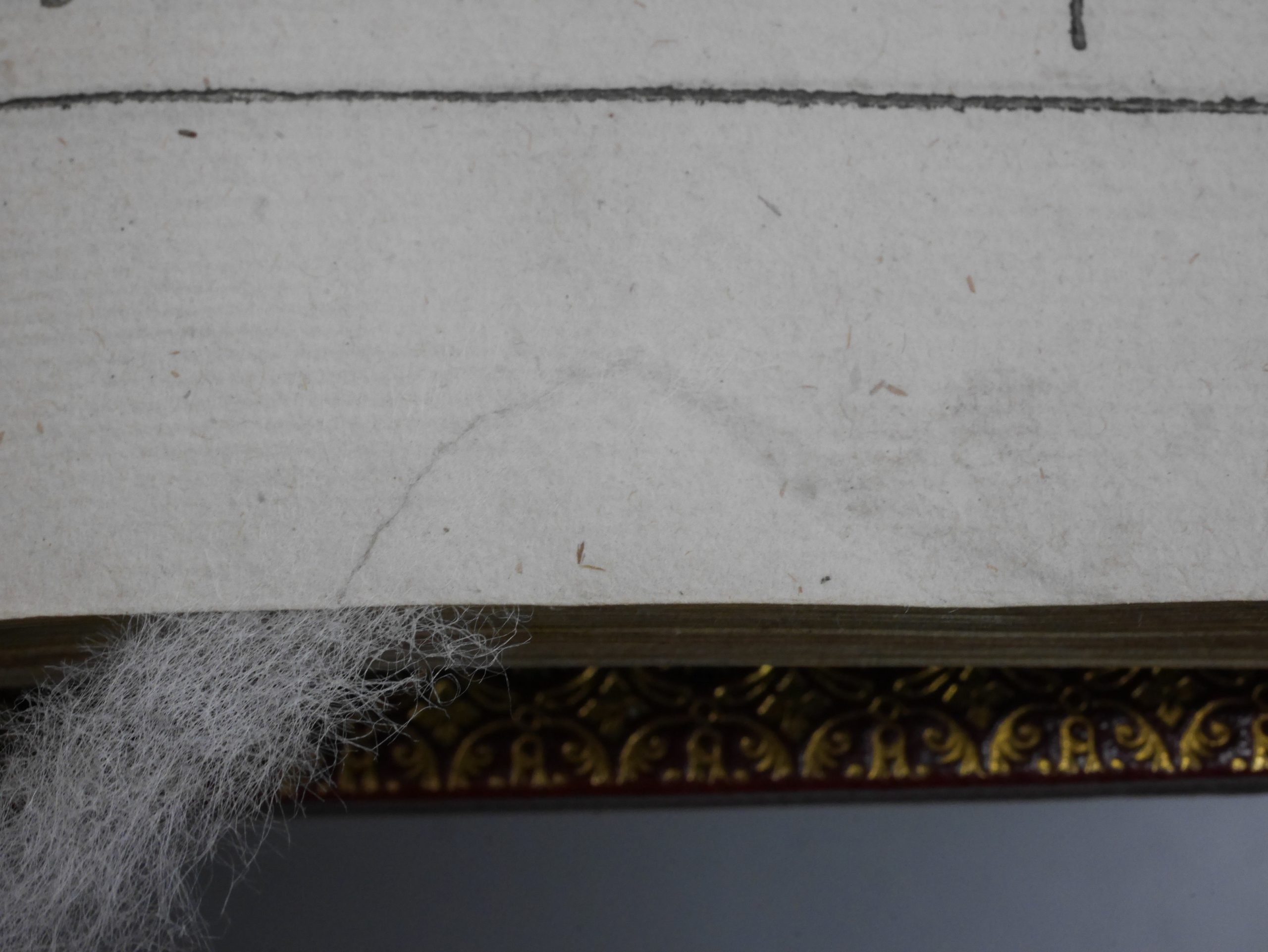
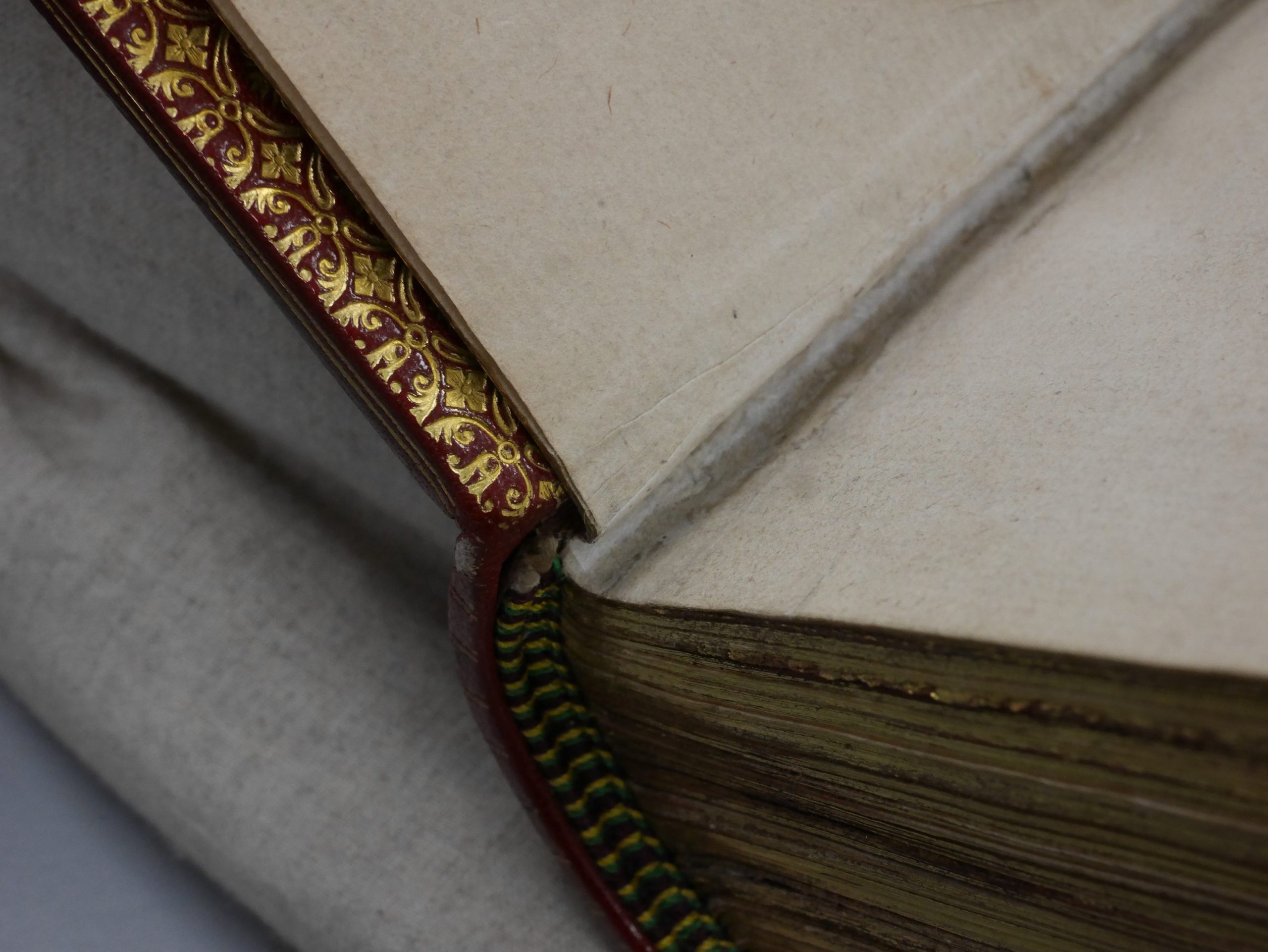
The treatment was as follows. One side of a Japanese paper (Usumino 14gsm) v-hinge was attached to the group of detached leaves (first marbled paper flyleaf, following two paper flyleaves and the first leaf, “To the reader”) with wheat starch paste. The other side of the hinge was pasted into the shoulder of the binding along the inside of the join to reattach the leaves into the binding and integrate them into the rest of the text block. This method allows for the volume to open stress-free at this particular opening. A narrow strip of very fine Japanese paper (Tengu 3.5, toned with acrylic) was pasted to the inside join over the marbled paper pastedown and flyleaf to further consolidate the cracks and tears created when the leaves were detached. Paper tears within the volume were repaired on both sides with a fine Japanese paper (Kozo, KR7 -7gsm) and wheat starch paste.
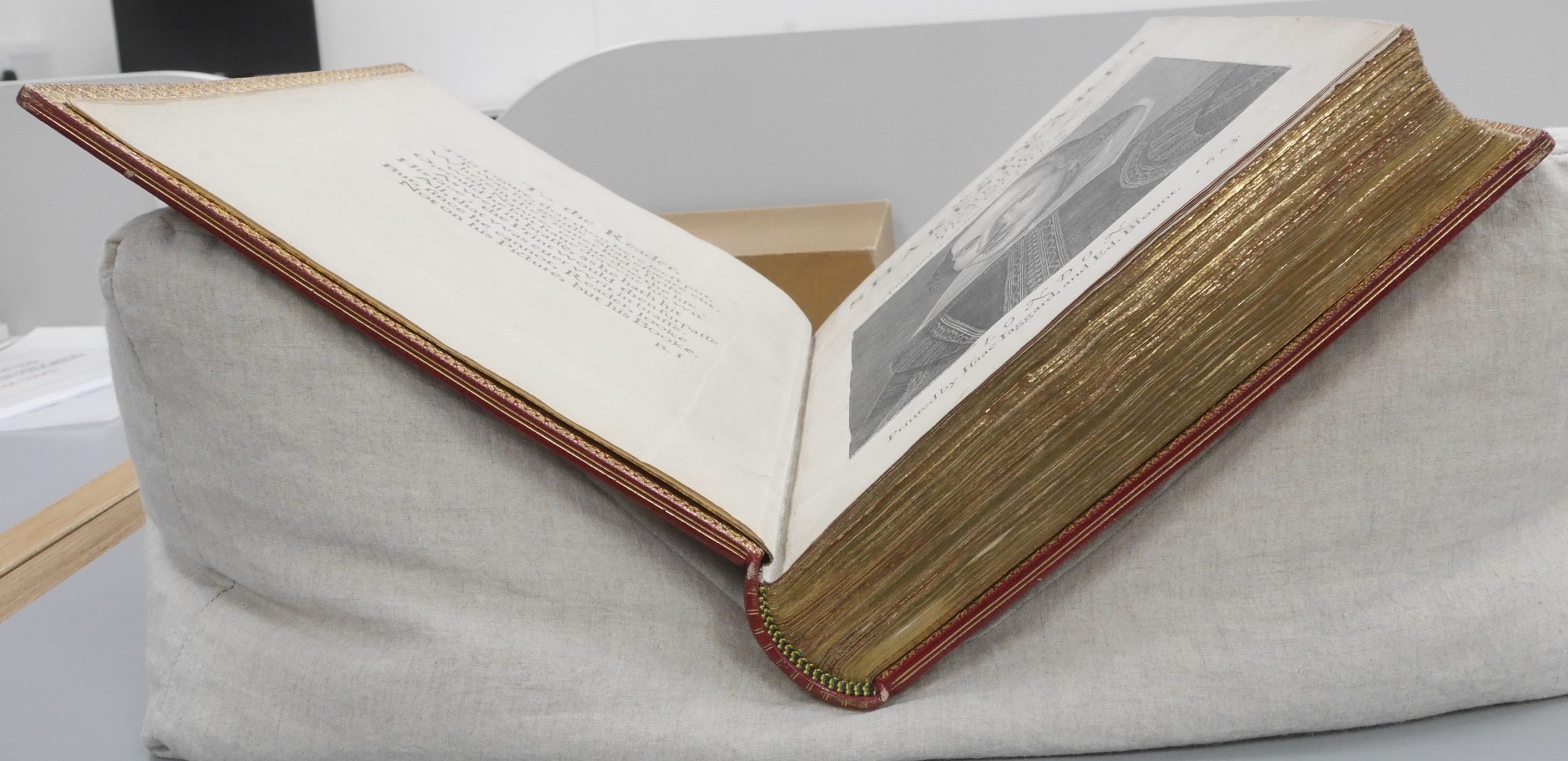
A new box will be created to hold the volume, and it will soon be available to researchers who have a particular need to consult the physical book. Those with a general interest are encouraged to consult the book online through the digital library, where it is freely available.