
Rehousing unusual objects: a challenging conservation project
Special Collections in the University Library include more than just books, manuscripts, maps and archives. The teams also look after a wide range of textual objects which offer particular challenges when it comes to storage and consultation. This post describes a recent conservation project to rehouse eighty unusual objects plus a collection of 136 ostraca (fragments of broken pottery used as a writing surface). Conservator Sharon Catlin was assigned the task of conserving and rehousing each item, with care and consideration. Below is her account of the project work.
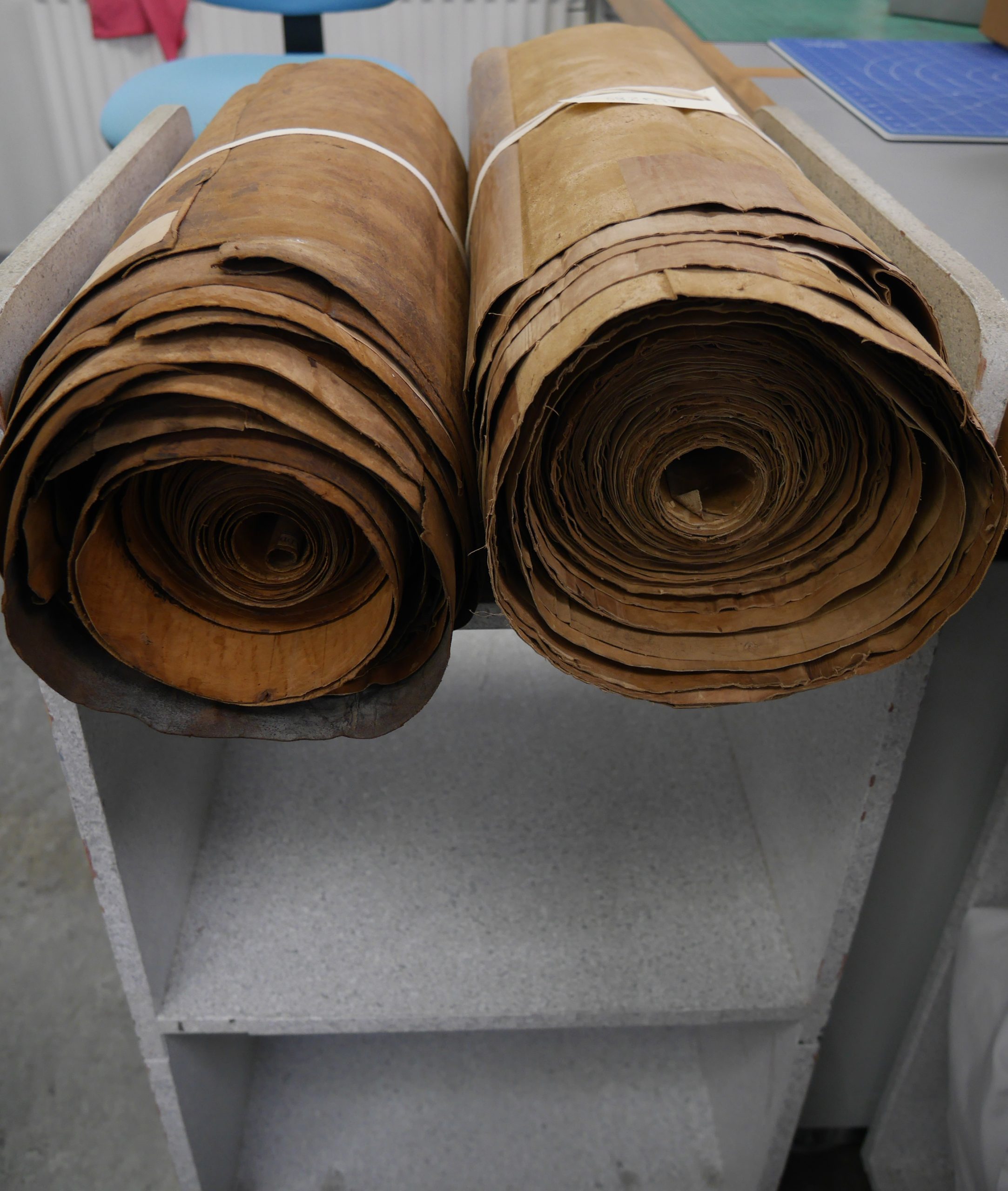
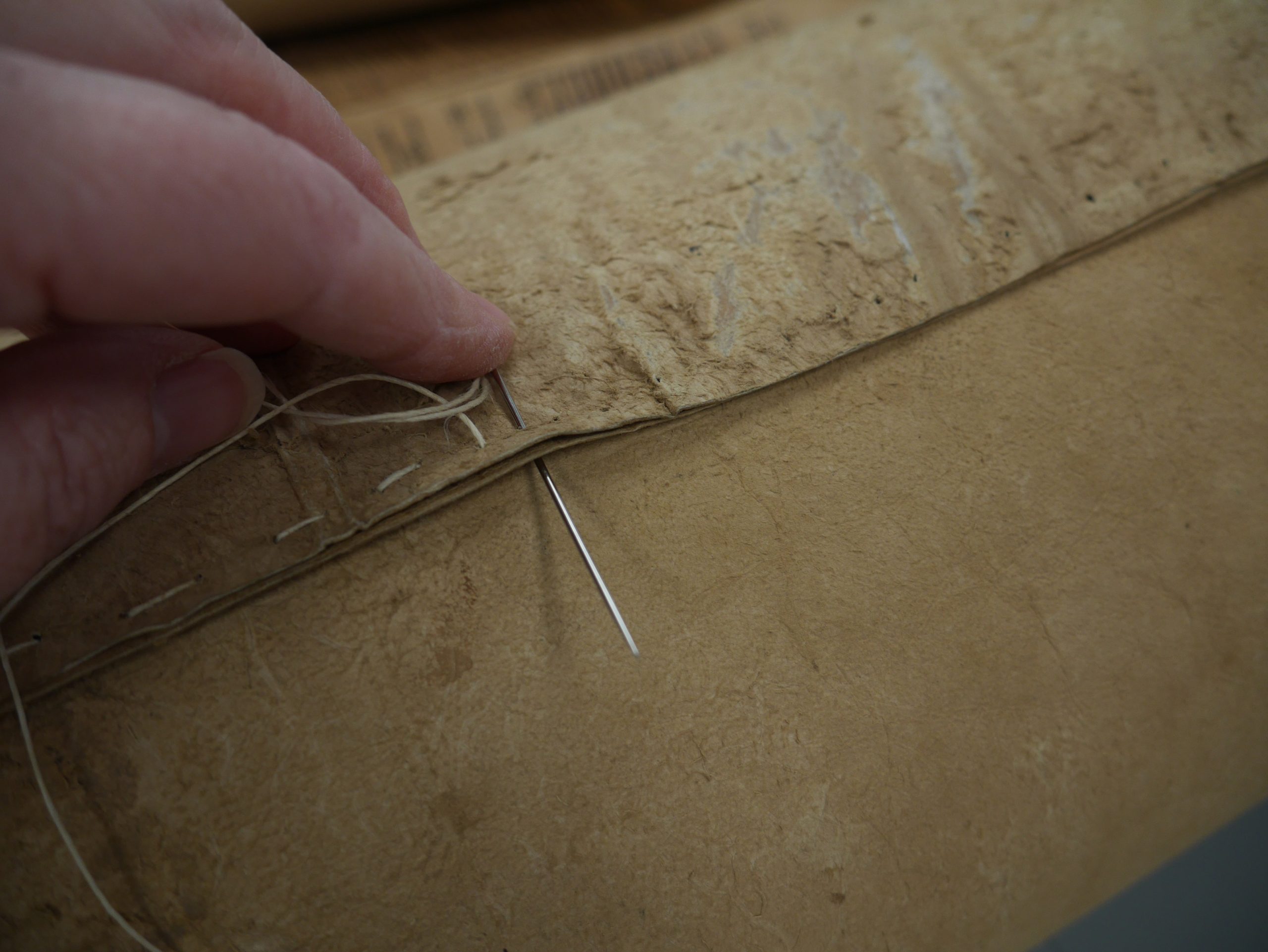
One set of items I worked on were very large and heavy Torah scrolls, rolled onto large wooden rollers, called Atzei Chaim. Each scroll is made from many skins sewn together. Some of the wooden rollers were missing and I had to make tubes to support the scrolls. Rerolling the scrolls onto their rollers neatly was an arduous job that required a lot of bench space and physical strength. Whilst rerolling, I discovered some of the sewing structures had deteriorated, so I also needed to carry out some resewing repairs.
Another set of items in the cupboard were housed in fragile, crumbling straw-board-boxes. It was exciting opening up the boxes as I was not sure what I was going to find; some had notes from previous librarians detailing when the objects were entrusted to the Library. Some of the other objects I discovered included small delicate papyrus leaf scrolls which were secured with intricate papyrus windings, a quiver of arrows, a range of commemorative coins, various certificates, a leather Ethiopic satchel, and a set of World War I medals.
Separately, in a battered old box, was a substantial inscribed stone tablet. As this object was too heavy to house in a box, I constructed a sturdy tray base with a covering lid for protection.
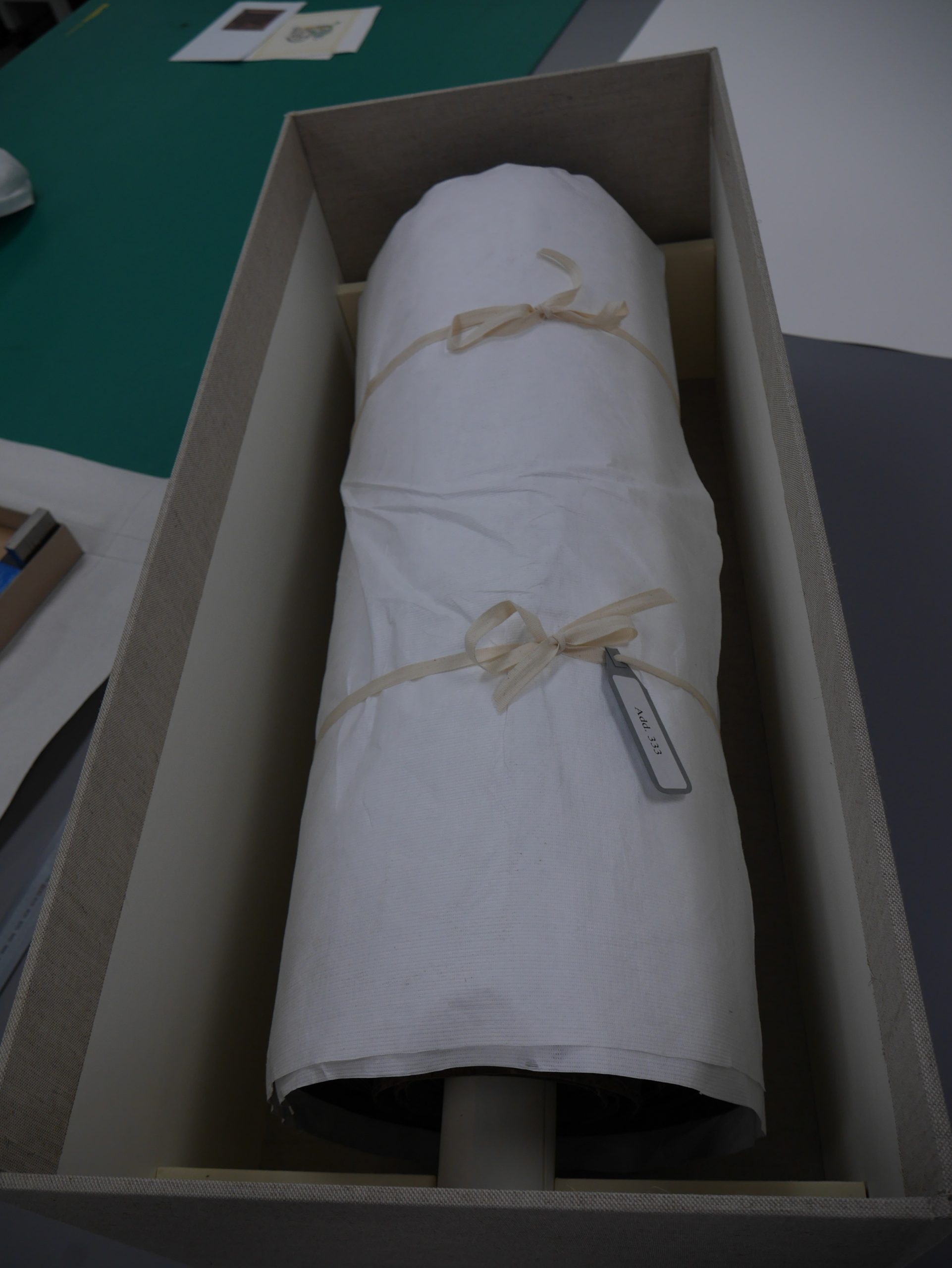
I also designed and created a set of bespoke shoebox-style boxes for the smaller items. These were made of e-flute board, a lightweight yet strong construction material. For the larger Torah scrolls, I used the stronger millboard, which I covered in legal buckram book cloth. To protect the skins, I suspended mount board supports within the boxes.
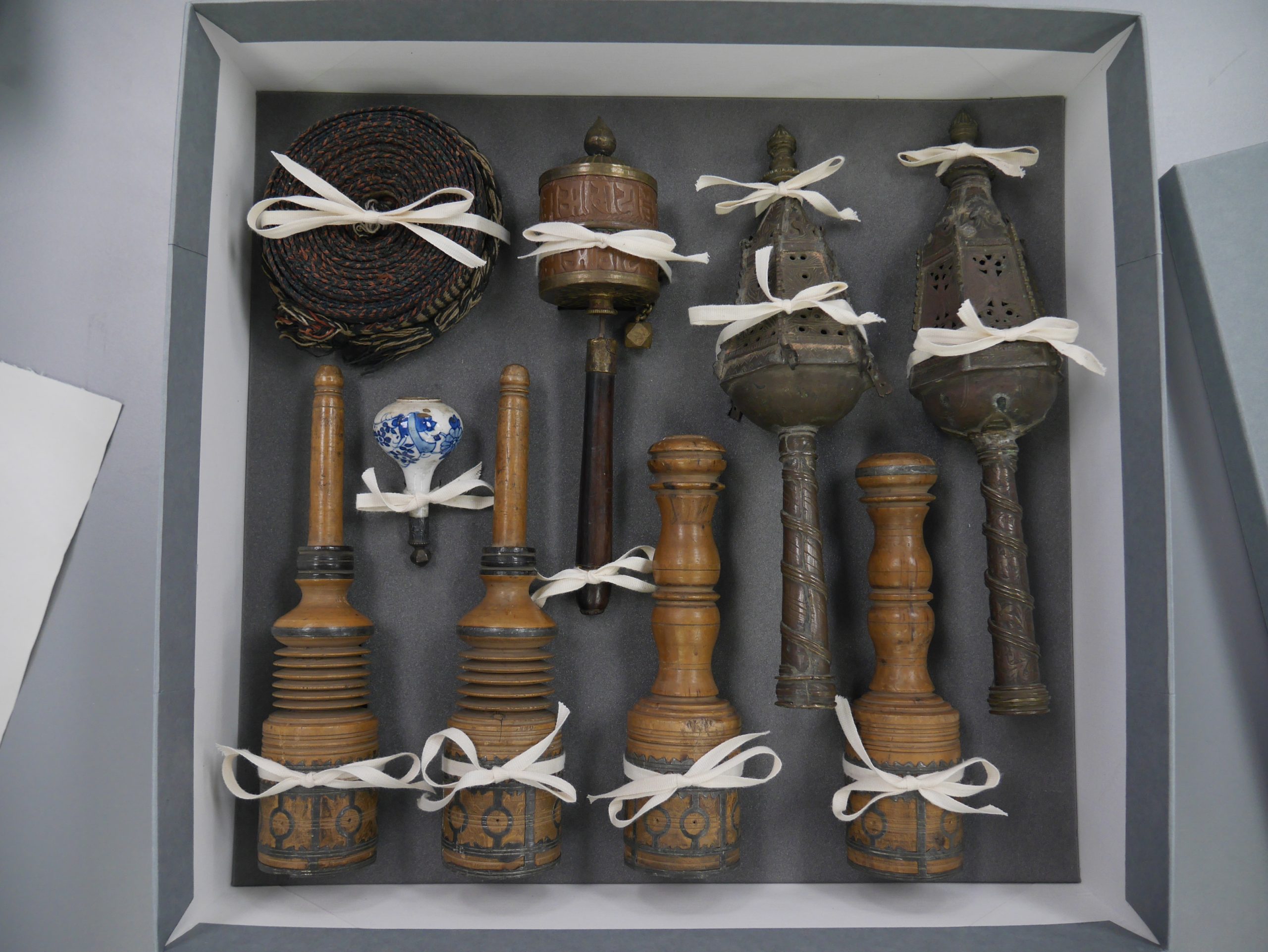
Once I came up with the design templates, it was quite straightforward to adjust the size of every box, and I become quick and efficient at making the set of boxes.
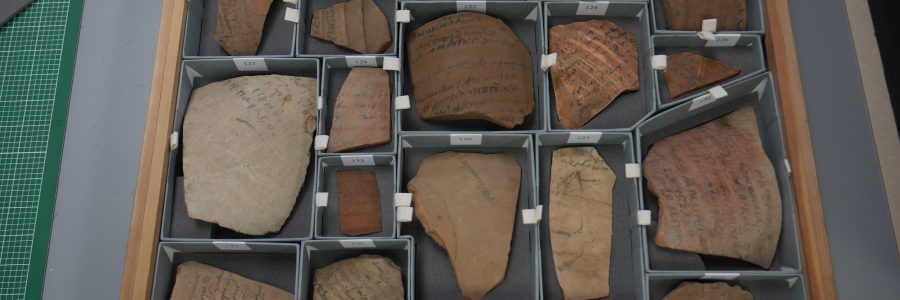
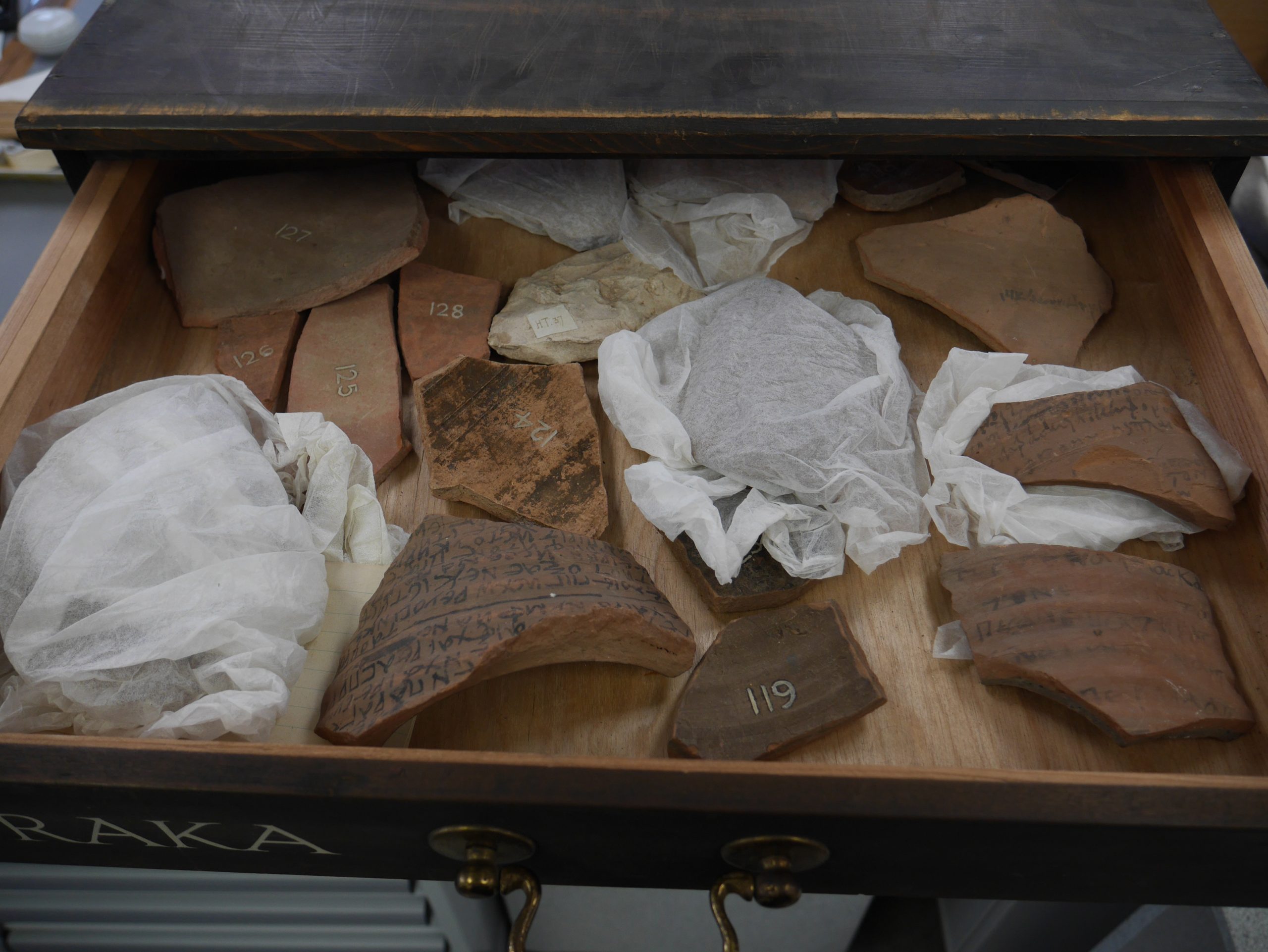
One of the last jobs consisted of working on a large six-drawer wooden chest, which contained 136 pieces of different sized ostraca. Ostraca are broken pieces of pottery or ceramic, used in antiquity as a writing surface for short notes, receipts, and letters. As well as each piece being a different size, the depth of the six drawers also varied. I needed to plan, arrange, and organise the ostraca in such a way that the unique pieces would fill each drawer neatly to prevent the items moving about. It was a fun Tetris-like challenge!
I created an assortment of made-to-measure trays made from e-flute board and then lined the base with hand-carved pieces of plastazote. This plastazote allowed the ostraca to sit flat in the tray and more importantly securely. Each piece was already assigned a number; where possible, to help with item retrieval, I placed the trays in numerical order. I gave each tray tape tab handles, as this would help with retrieving individual trays from the drawers.
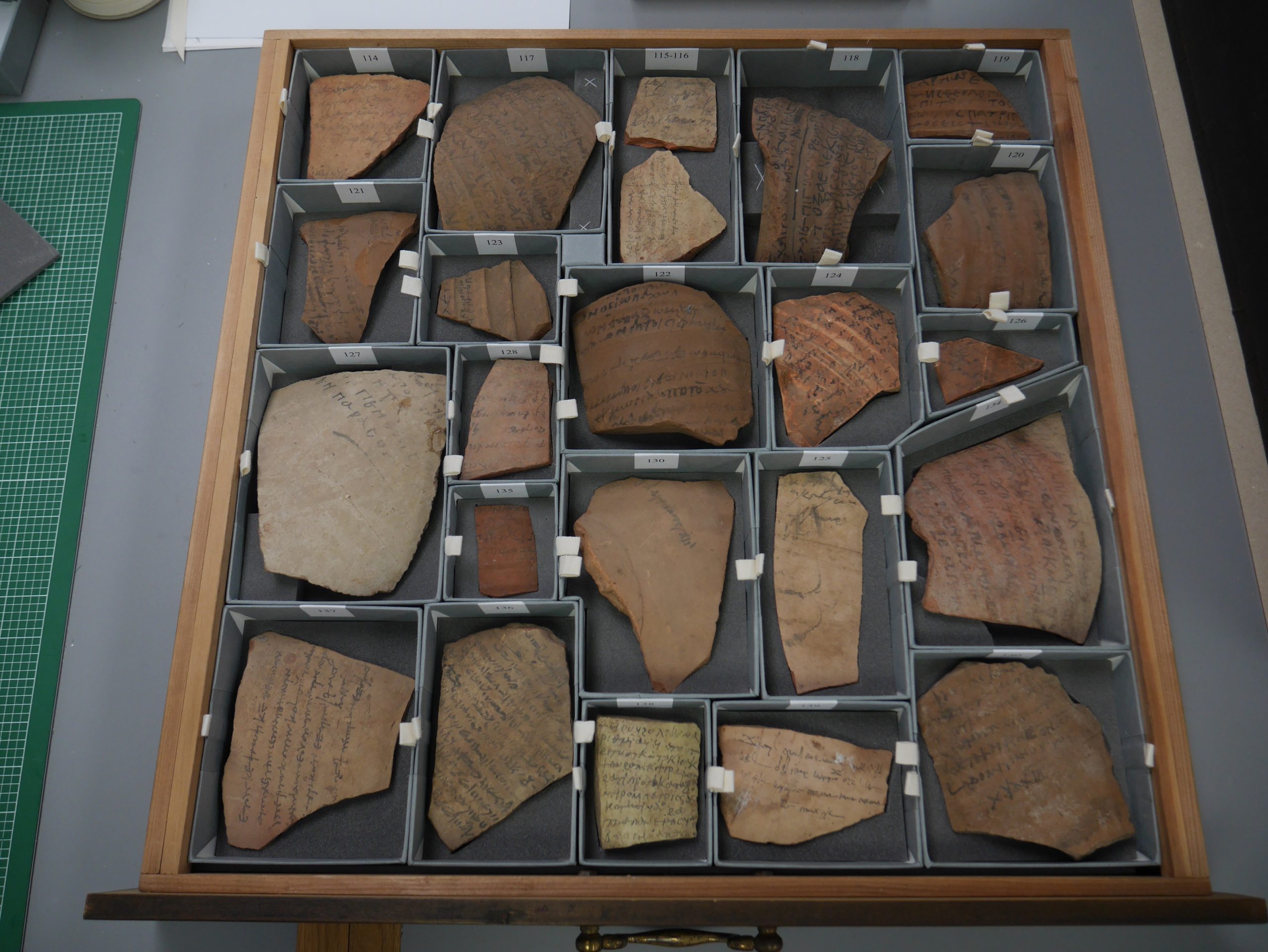
The project was a success, and each object is now placed safely and securely onto the shelves in the book stacks. This makes object retrieval easier and also ensures each item is protected and housed safely for the long term. Looking back on the completed project, it was a pleasure to work on these delicate and unique objects. It was an immensely enjoyable project, which required creative thinking and problem solving, I am very proud to have worked on this from start to finish.