
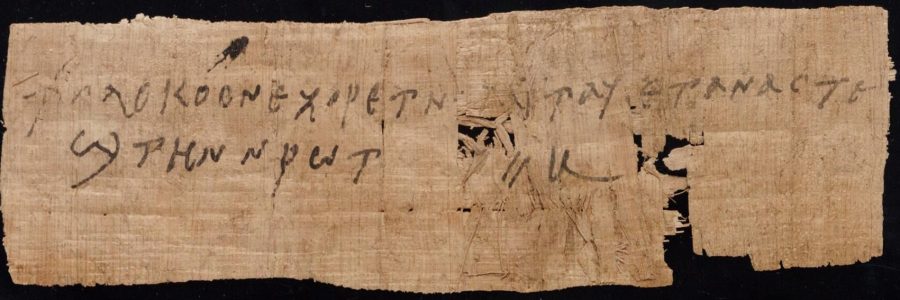
Michaelides Coptic papyri added to the Digital Library; a project over time
In 1977, Cambridge University Library purchased the Michaelides collection of papyrus fragments from the heirs of the late antiques-dealer Georges Anastase Michaelides (1900-1973). Born in Cairo and educated in Egypt, but later in life in France, Michaelides had developed a lifelong passion for the history of Egyptian culture from its early civilisations and extending beyond the Islamic conquest. At the time of his death, Michaelides had amassed more than 1,700 manuscript fragments, predominantly written on papyrus, but with a small number in the collection written on parchment or paper and a very small number on linen or wood. Papyrus was the predominant writing material of pharaonic Egypt, remaining in use through the Greek and Roman Periods, but was gradually supplanted by parchment and paper through the Byzantine and Early Islamic Periods.
The texts in this collection, date from the first to the ninth centuries C.E., and are written in several languages and scripts, predominantly Arabic, but there are also texts in Greek, Turkish, Persian, Latin and ancient Egyptian languages, including items in the Hieratic and Demotic scripts. Of significance for this project, over 200 fragments are written in Coptic. Michaelides had acquired these from dealers in Egypt, often in large miscellaneous lots and, unfortunately, the original find-spots of the fragments are not recorded.
The various dialects of Coptic are descended from the ancient Egyptian language and were spoken by Egyptians from approximately the third century C.E. in Roman Egypt. Coptic was slowly replaced by Arabic as the primary everyday language of Egypt following the Arab conquest of Egypt but it remains in daily use as the liturgical language of the Coptic Orthodox Church. Coptic script is written from left to right in a modified form of the Greek alphabet with seven additional letters borrowed from Demotic Egyptian. It flourished as a literary language across Egypt in the period c. 325 – c. 800 C.E.
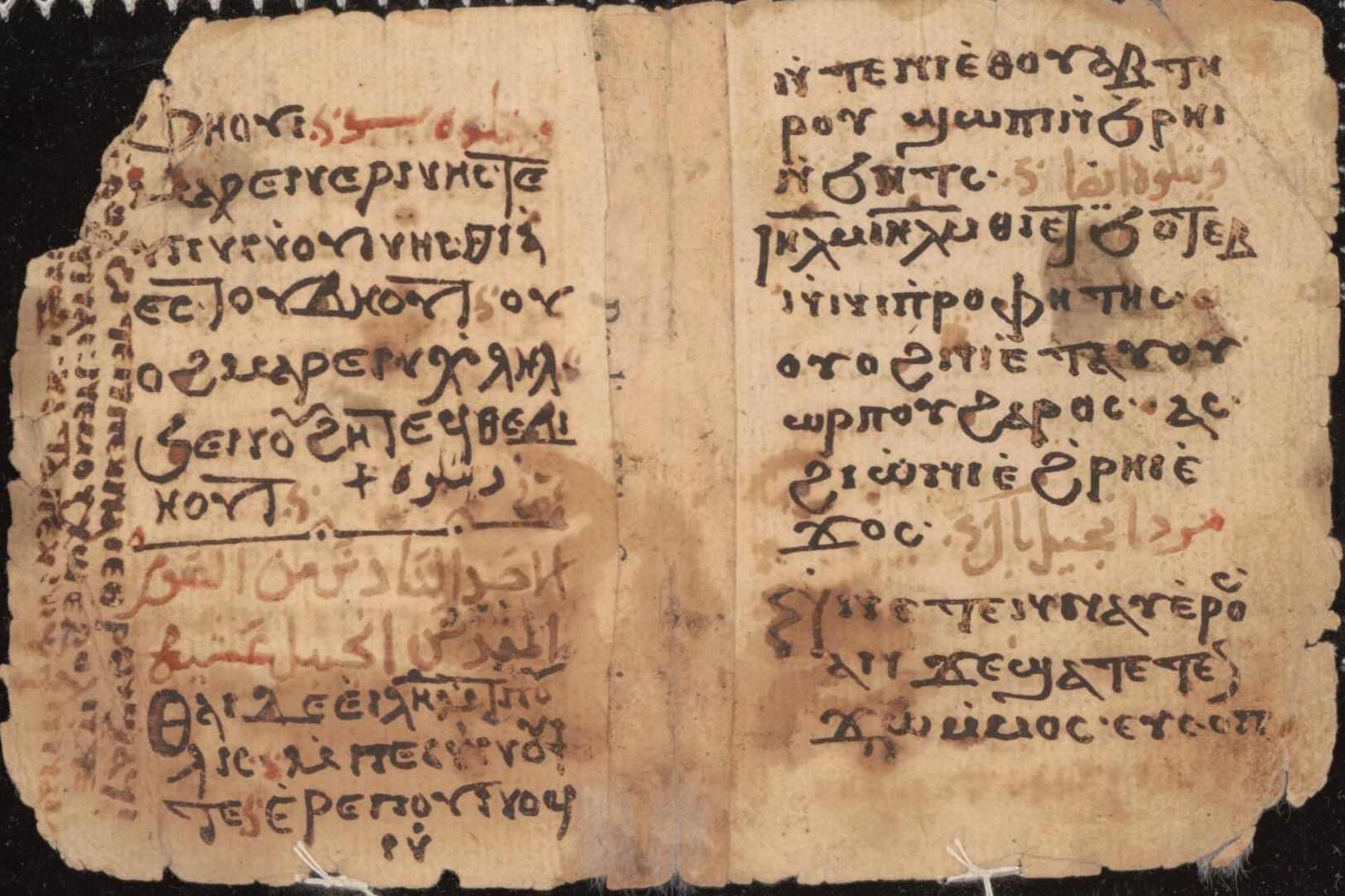
The Michaelides collection was originally listed for sale at the end of 1976 by a London manuscript dealer. Later in the same year, Mr W. A. Lockwood of the Near Eastern Department of Cambridge University Library (CUL) brought the sale to the Librarian’s attention. Along with his colleague Simon Hopkins of the Library’s Cairo Genizah Collection, they had discussed how the Michaelides collection would be of significant academic value to CUL and would complement the texts in the Genizah collection, the contents of which also originated from Egypt, many from a similar era.
The purchase of the collection is recorded in the Report to the Library Syndicate in 1976–77 which states that the papyri had been acquired in two instalments, one of 978 items in 1976 and a second collection of 594 items acquired in the following year. Library funds for their purchase were augmented from outside sources. Other parts of the original Michaelides collection were purchased by the British Library in 1976 and 1979.
Now, digital images and brief meta-data of the Coptic fragments have been made available on line in the Cambridge Digital Library at Michaelides Fragments: Coptic
The conservation and cataloguing of the collection proved to be a complex task and it was some time before significant progress was made. Efforts to make progress with the work since their acquisition have been fraught with delays. The acquisition and accessioning of the Michaelides collection is mentioned in the Near Eastern Department’s Annual Report for 1976-77. The Report for the following year also describes the efforts made to conserve the fragments between glass sheets, but this intention seems to have been soon abandoned, possibly due to expense. Approximately 170 papyri were conserved in this way and a smaller number were housed in loose in paper folders, but the great majority of the fragments are still stored between sheets of polyester film. As conservation progressed, each of the fragments was provided with a numerical class-mark for identification, and then stored in large, flat grey boxes made of acid-free cardboard which are shelved with the Library’s manuscript collections. The glazed fragments are stored on horizontal pull-out shelving in a large metal cabinet.
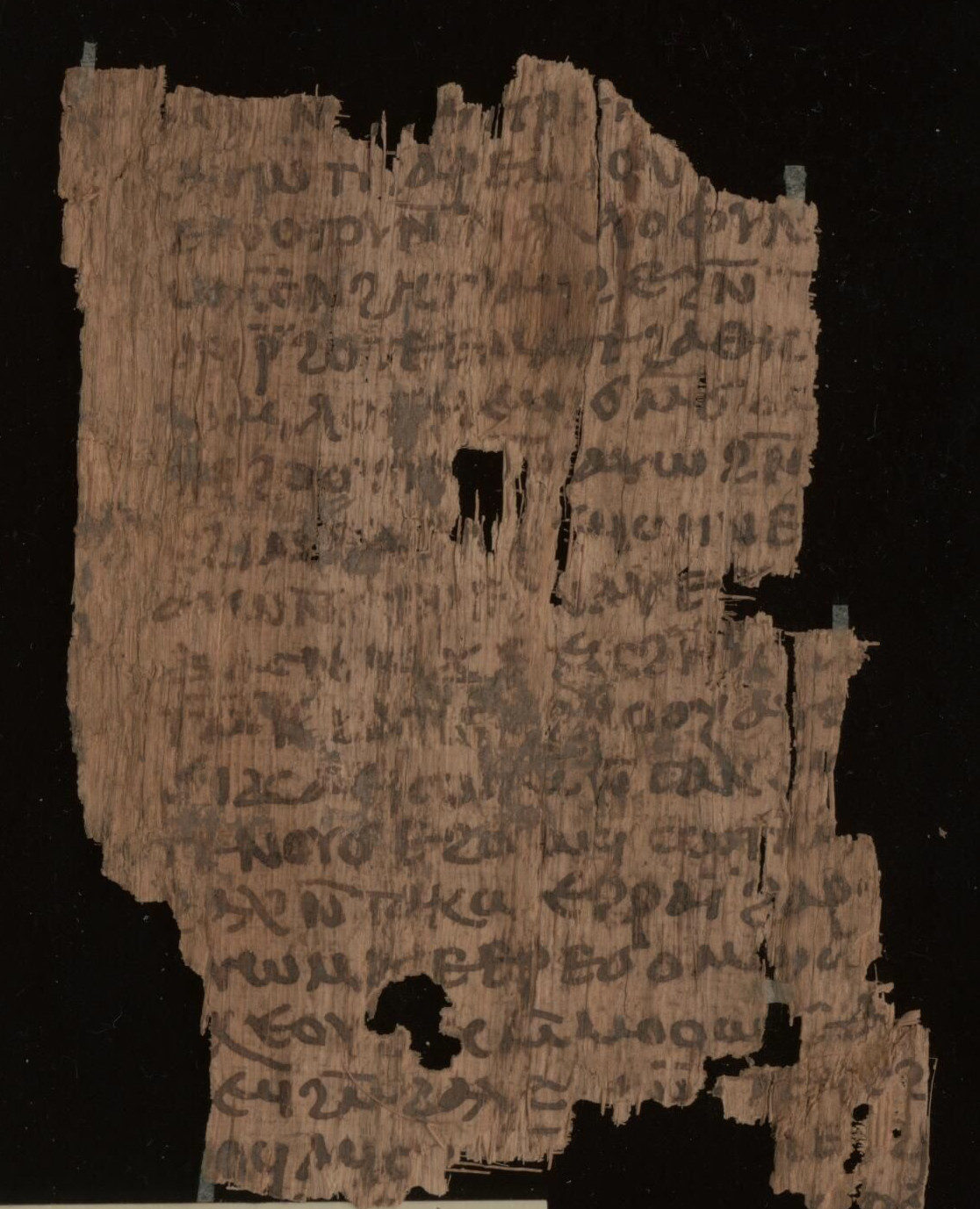
In 2012 the complete Michaelides Collection was digitised to produce high quality digital images. This was part of a much larger project to digitise the Genizah Collection with the intention of providing online access to it via the Library’s Digital Library. In 2016 the Arabic fragments were added to the Digital Library with the description of each fragment based on an unpublished handlist written by Dr (later Professor) Geoffrey Khan during his time as a researcher working in the Genizah Research Unit between 1983–93. This collection is accessible at Michaelides Fragments: Arabic but due to a lack of availability of specialist staff and funding at that time, no progress was made in the cataloguing of the fragments in Coptic.
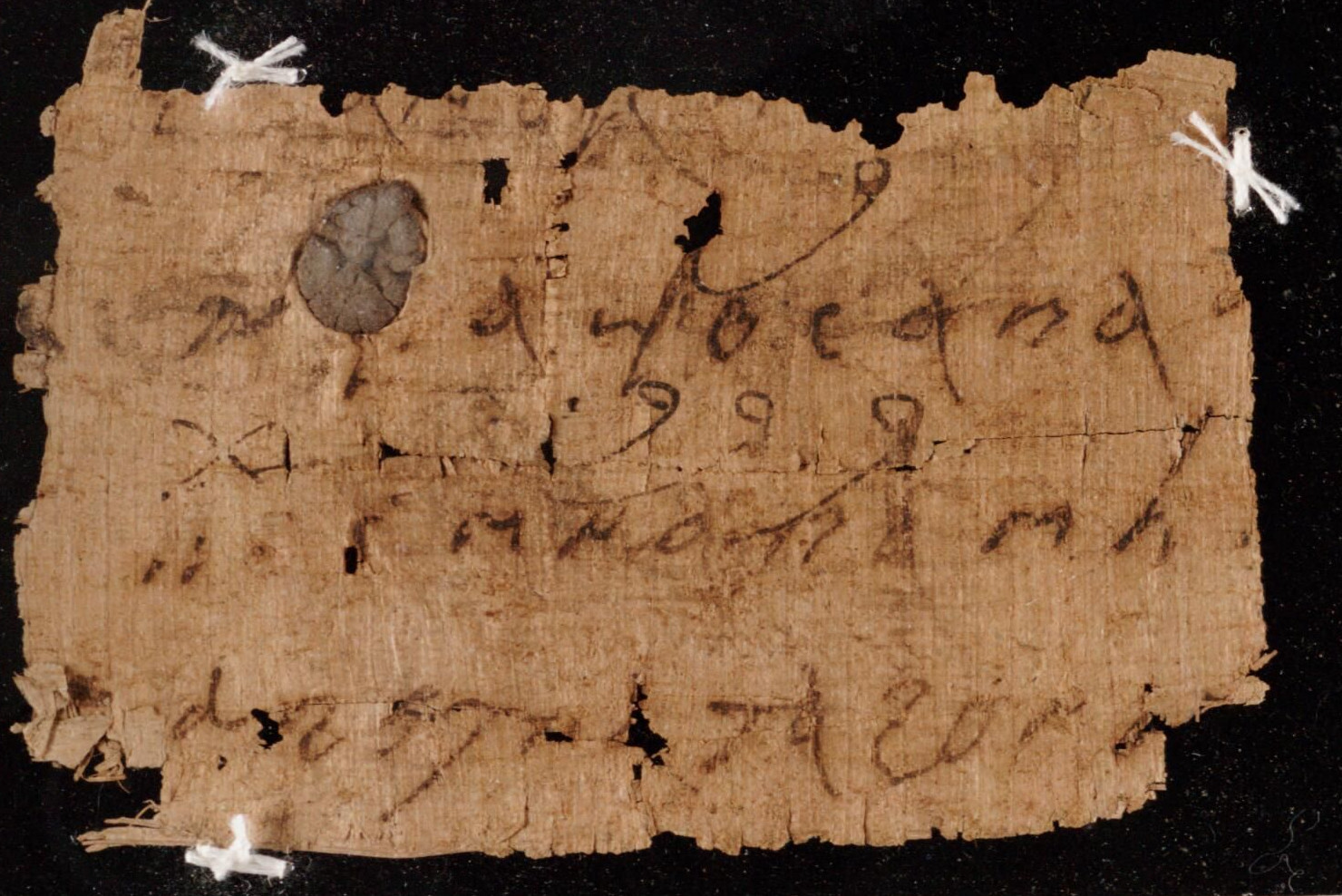
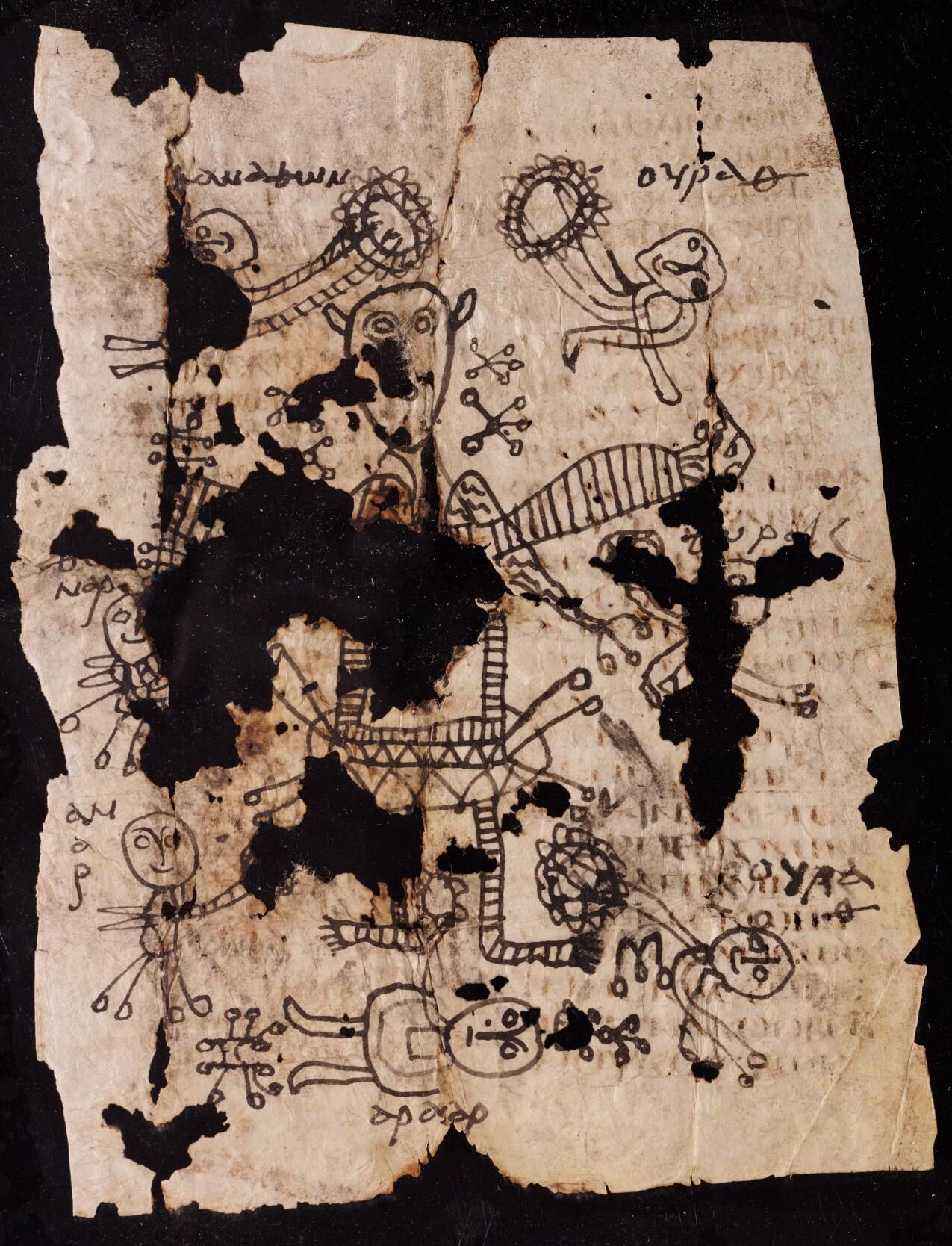
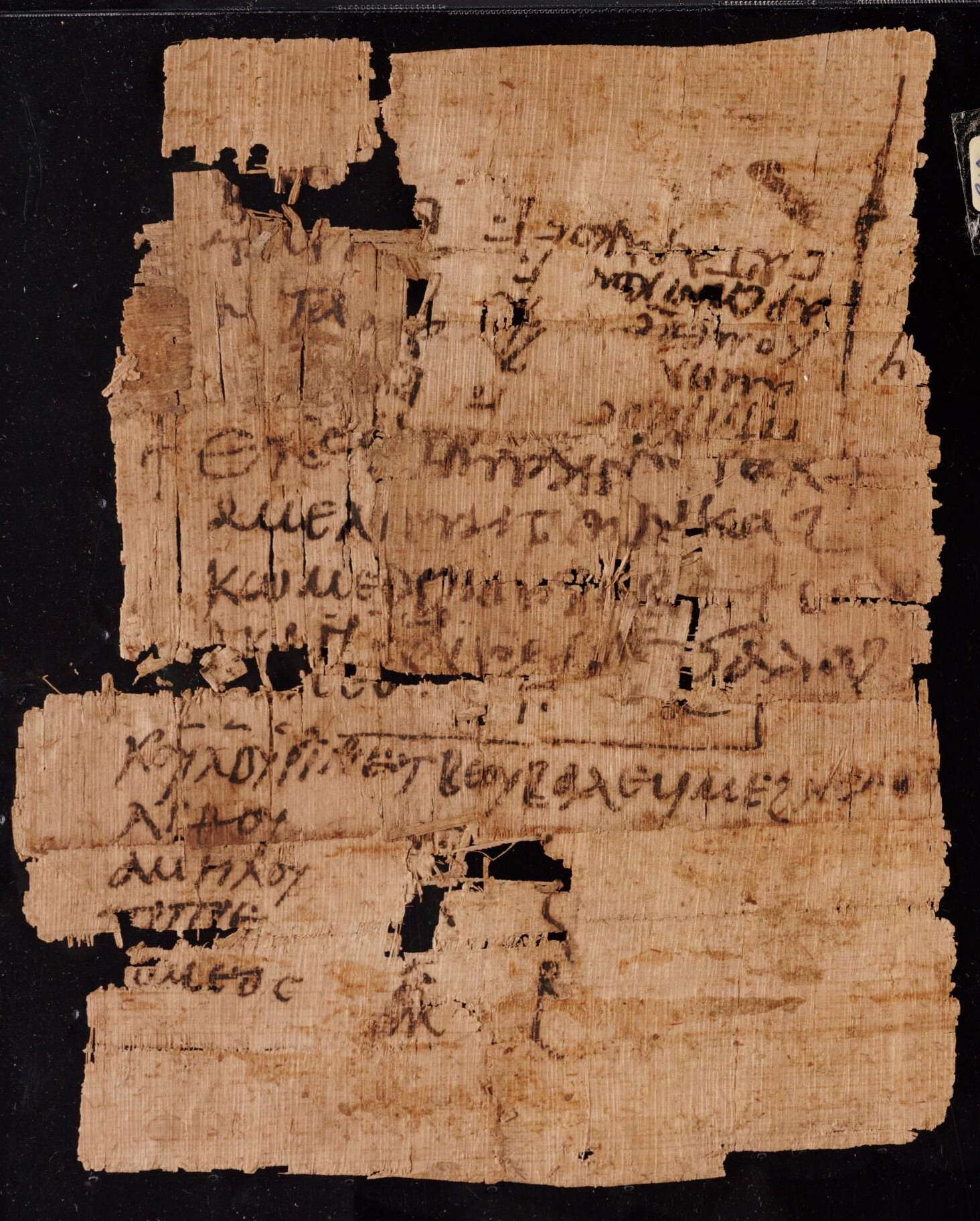
The Coptic texts in the Michaelides collection are very varied in content. The fragments are mostly quite small in size, and nearly all broken or torn at their edges so that few contain a complete text or even a complete sentence. Among them, it is possible to identify legal texts, accounts, literary texts and recipes. Some of them deal with administration, especially that of monasteries, and there are business documents, including lists and receipts, written in letter form. As often in Coptic material, there are numerous records of deliveries and accounts of wine. There are also examples of magical and medical texts, amulets and personal letters.
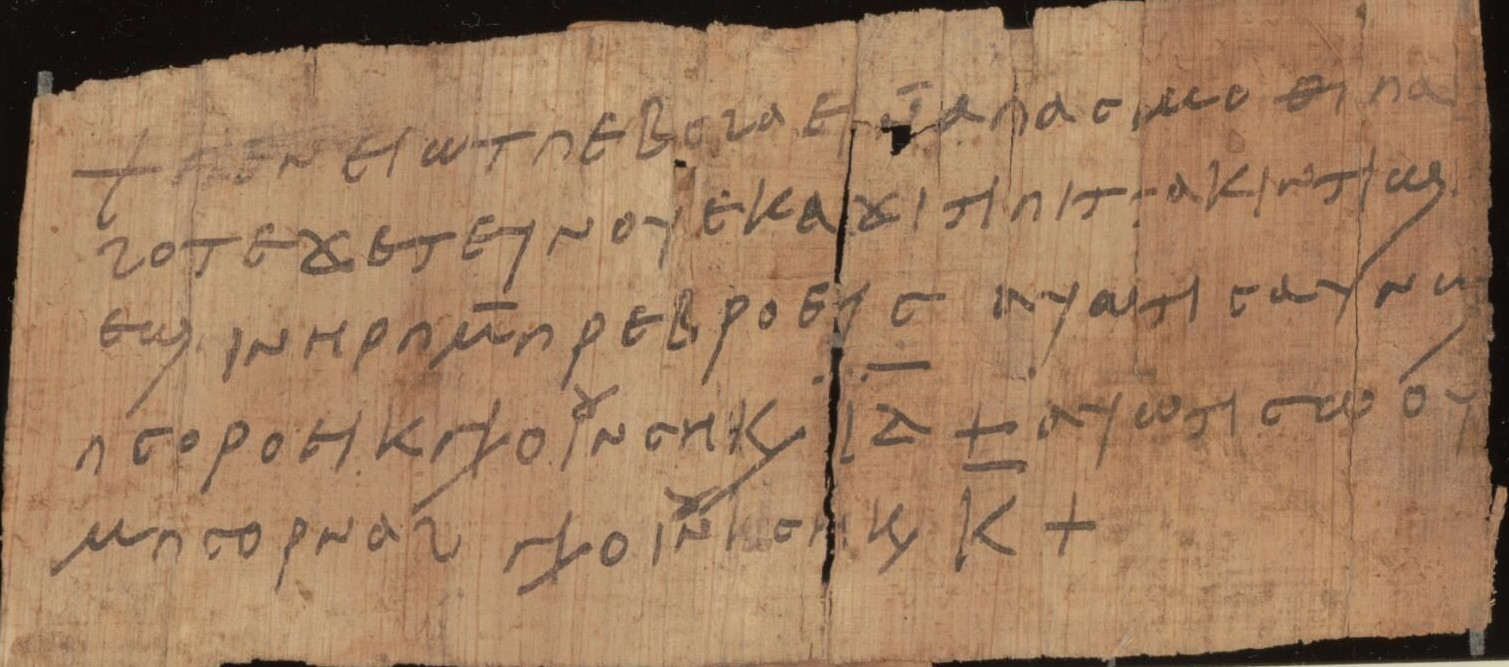
The material includes texts in several Coptic dialects, and is of considerable interest for palaeography, including a very wide range of styles of hand, ranging from formal book-hands to the most rapid documentary cursive. There are examples of the work of well-practiced professionals, but also of those who clearly had difficulty in forming and spacing their letters.
There is no record of the original find-spots of these fragments, and where the texts were written is generally uncertain or disputable, except for those from the monastery of Apa Apollo, but some places, such as Antinöe and the Fayum are mentioned in the texts. A small number of the fragments contain drawings or carry bullae (clay seals).
Only a small proportion of the Coptic manuscript fragments had already been the subject of academic study. A few had been published: notably, by the late Sarah Clackson (1965–2003), the Cambridge Coptic scholar, who edited a number of documents originating from the monastery of Apa Apollo. Since her death no further work had been carried out due to lack of funding and relevant expertise, although the value of the collection as an academic resource was fully recognised and the digital images had been available for some time.
The project to work through the Coptic fragments in the Michaelides collection, studying each one individually and recording data in preparation for a catalogue began early in 2020. Textual content was provided by John Tait, (Emeritus Professor of Egyptology from University College, London), a long-time reader in the Library who had provided assistance in the past on Coptic manuscripts and who already knew of the Michaelides Coptic collection. Notes on the textual content were recorded by Catherine Ansorge (Library Volunteer based in the Library’s Genizah Unit), who also knew of the collection’s history in the Library. The fragments were studied in the Manuscript Reading Room, working through the contents of each box one by one for closer study. Subsequently the two were joined by Dr Anna Johnson, at that time employed in the Library’s Conservation Department, who brought to the project her specialist training in papyrus conservation, handling practice and additional valuable information on provenance. She provided a description of the physical condition of each fragment.
Data collection began with a meeting held in March 2020 and details of the text and physical condition of each fragment were noted and recorded in a spreadsheet shared by all three contributors. The spreadsheet included fields to record the content of each fragment and also the date and place of origin where these were known. Unfortunately, progress on the project was delayed almost immediately by the COVID lockdown which resulted in the closure of the Library and no further meetings could be held until the following year. Working remotely on the material was attempted, but such detailed data proved too difficult to continue. Meetings began again in September 2021, the schedule depending on the availability of the three team-members, and, though infrequent, good progress was made at each session. The description of each fragment is in most cases a precis of the text rather than a translation as the fragmentary nature of the texts made translation difficult. Some names and phrases in the original Coptic are included in the data.
An initial study, with basic notes on all the Coptic fragments, was completed by November 2023 but there were many outstanding problems to be resolved. Some fragments, which were stored separately in the Library’s stack room had been missed from the initial study and other fragments, on closer study, were identified as fakes which nevertheless had been incorporated into the collection. In the end it was decided to include these in the project as well as various fragments written in Demotic Egyptian and in Greek, because they are few in number, and would be unlikely to be included in any other project. Also, a small number of fragments were found to have been written not on papyrus but on parchment, paper, linen or wood and these were also included in the study.
Subsequent to the initial data collection it was necessary to check the data spreadsheet for consistency: editorial work on the spreadsheet was carried out by all three participants and bibliographical details of a small number of fragments which had already been published, were checked and added to the data. The spreadsheet data was then passed to Huw Jones and Imogen Ford of the Library’s Digital Library Unit who suggested further corrections to the data to improve consistency. A small number of images had been missed and this omission had been rectified with the help of the Library’s Cultural Heritage Imaging Laboratory (CHIL). The data was added to the Cambridge Digital Library (CUDL) as a separate collection, going live in early December 2024. Each online record was checked for accuracy by the original contributors and a final edit to provide a consistent visual style was carried out by Suzanne Paul, Keeper of Rare Books and Early Manuscript Collections.
The collection, the first Coptic collection of this nature to be available online, has been advertised on email circulation lists which focus on the study of Egyptology and on the Ancient Near East and has already generated interest among Coptic scholars both in the UK and internationally.