

Public Schools and Empire
Between 1925 and 1939 more than 500 schoolboys from some of the most well-known and exclusive fee-paying schools in Britain participated in tours to what were then the key dominions and colonies of the British Empire. Groups travelled to Australia (1926-7), Southern Africa (1927-8), Canada and Newfoundland (1928), New Zealand and Australia (1929), India (1929-30), East Africa (1930), and the Caribbean (1931), with repeat tours through the 1930s up until the outbreak of the Second World War. These School Empire Tours, sometimes referred to as Public Schools Empire Tours, were a feat of planning and organisation, overseen by an enthusiastic committee in London. The tours can be seen partly as an educational endeavour and partly as a contribution to wider attempts in the interwar period to encourage emigration, in particular to the dominions, and to generate good publicity just at the point at which strong anti-colonial and self-determination movements had begun to gain momentum.
A scrapbook album recently donated to the Royal Commonwealth Society (RCS) collection (now catalogued as RCS/RCMS 429) illustrates the second tour of 1927/8 to Southern Africa. The official tour booklet pasted into the front of the scrapbook states: Time alone will show whether these boys will settle overseas; they will at least return home bronzed by the sunshine of South Africa with a practical idea of the meaning of Empire based on concrete experience […]
The tour group consisted of 43 boys from 27 public schools, including Eton, Harrow, Rugby, Winchester and Sherborne. The tour leaflet summarised the aims as: To add firsthand knowledge to the education gained at school, and to satisfy the demand of the rising generation to see with their own eyes something of the Great Dominions, and to tread for themselves the veld, the bush and the prairie, where others have built up history …
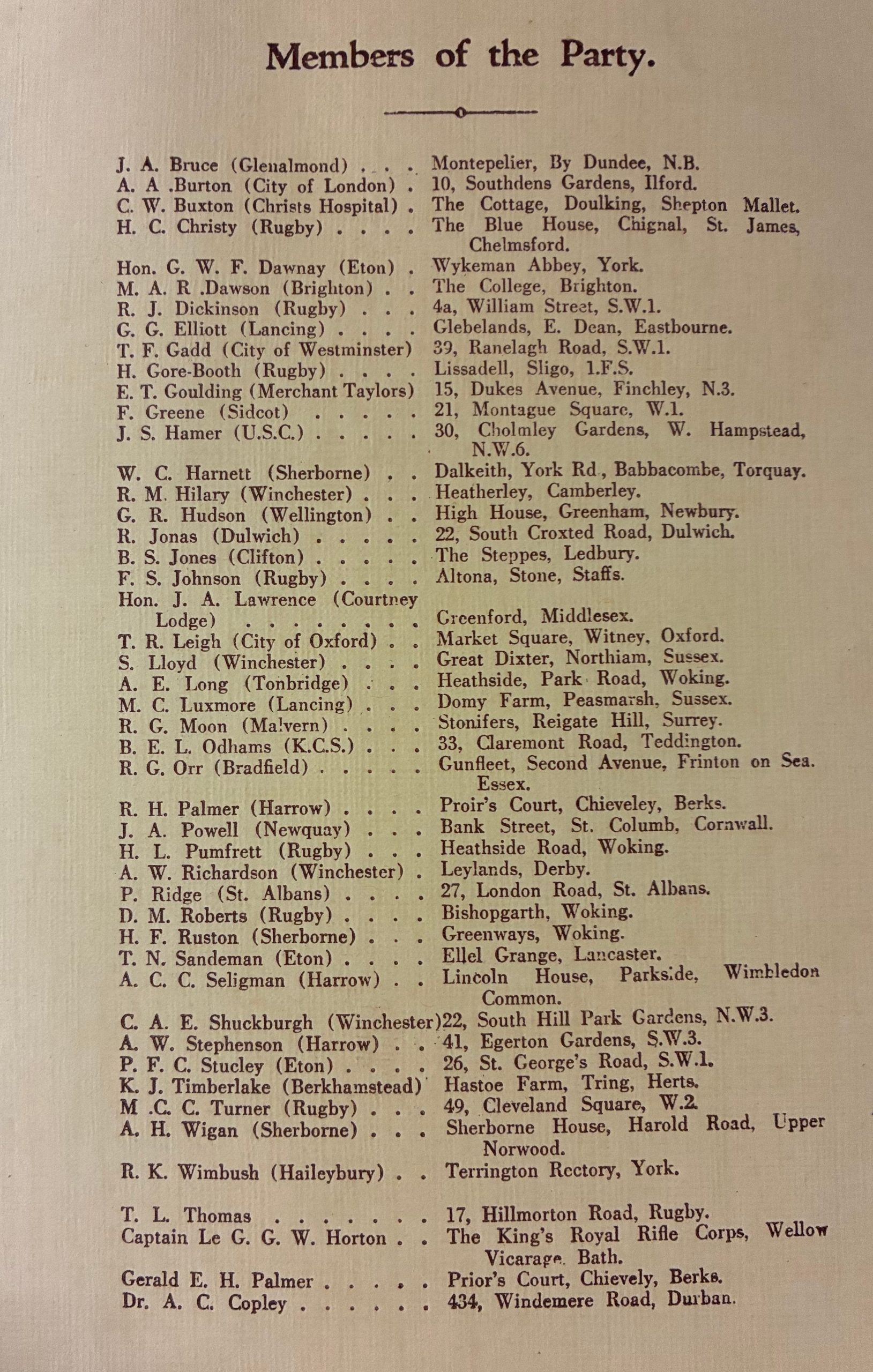
The tours were undoubtedly elitist both in composition of the touring party and in outlook. The Southern African tour was conducted by T.L. Thomas, an assistant master at Rugby School and later Headmaster of Repton School, Captain Horton, then adjutant to the Eton College Corps and later schoolmaster there, and Gerald Palmer of New College, Oxford. Palmer acted as the advance agent and travelled ahead to plan the itinerary, and to make practical arrangements on the ground. The cost of the tour was £120 per boy, with the overall cost heavily subsidised by allowances from the South African government, the railways in South Africa and Southern Rhodesia, and the Union-Castle Mail Steamship Company. Draft accounts pasted in towards the end of the album reveal the full cost of the tour to have been £4681.
The group assembled at Waterloo Station towards the end of 1927. They departed Southampton on the R.M.S. Balmoral Castle on 30 December and arrived in Cape Town on 16 January 1928. The packed itinerary covered: Cape Town, Worcester, Oudtshoorn, Port Elizabeth, Grahamstown, Bloemfontein, Maseru (Lesotho, then part of the High Commission Territories), Ladysmith, Maritzburg [Pietermaritzburg], Durban and surrounds, Balgowan, the Drakensberg Mountains, Johannesburg, Pretoria, Waterberg, Warmbaths, Rustenburg, Plumtree, Bulawayo, Victoria Falls, Gwelo [Gweru], Fort Victoria [Masvingo], Salisbury [Harare], Gatooma [Kadoma], Kimberley and Cape Town. The group departed on 9 April 1928 on the Windsor Castle.
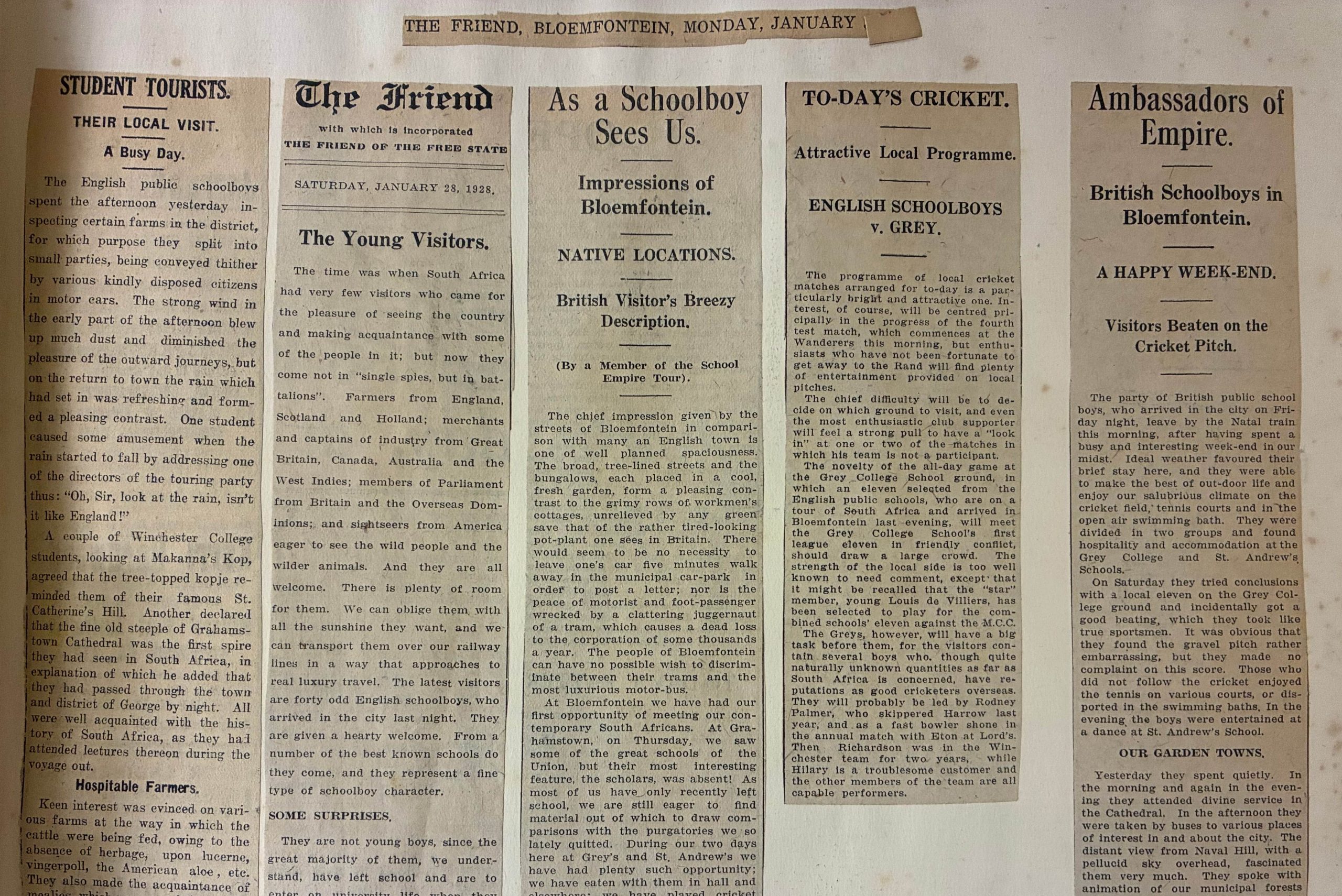
The tour was extensively covered in the local press, with major newspapers from the Cape Argus to the Natal Witness, the Rand Daily Mail and the Bulawayo Chronicle all reporting on the tour. The boys kept diaries, took photographs and a number were invited to submit short articles for publication in the local press. As well as formal visits and constant rounds of meeting dignitaries, the group played cricket matches throughout the tour with varying degrees of success. Visits were made to sites of long held British imperial fascination such as the battlefields surrounding Ladysmith and the grave of Cecil Rhodes at Matopos, alongside sites of natural beauty such as the Howick Falls, the Drakensberg mountains, Victoria Falls and the Great Zimbabwe complex. Emigration, however, was never far from the tour organisers’ minds and duly there were practical visits to farms and mines, and to the Royal Mint in Pretoria. The boys often boarded with host families, and were encouraged to correspond with their hosts during and after the tour.
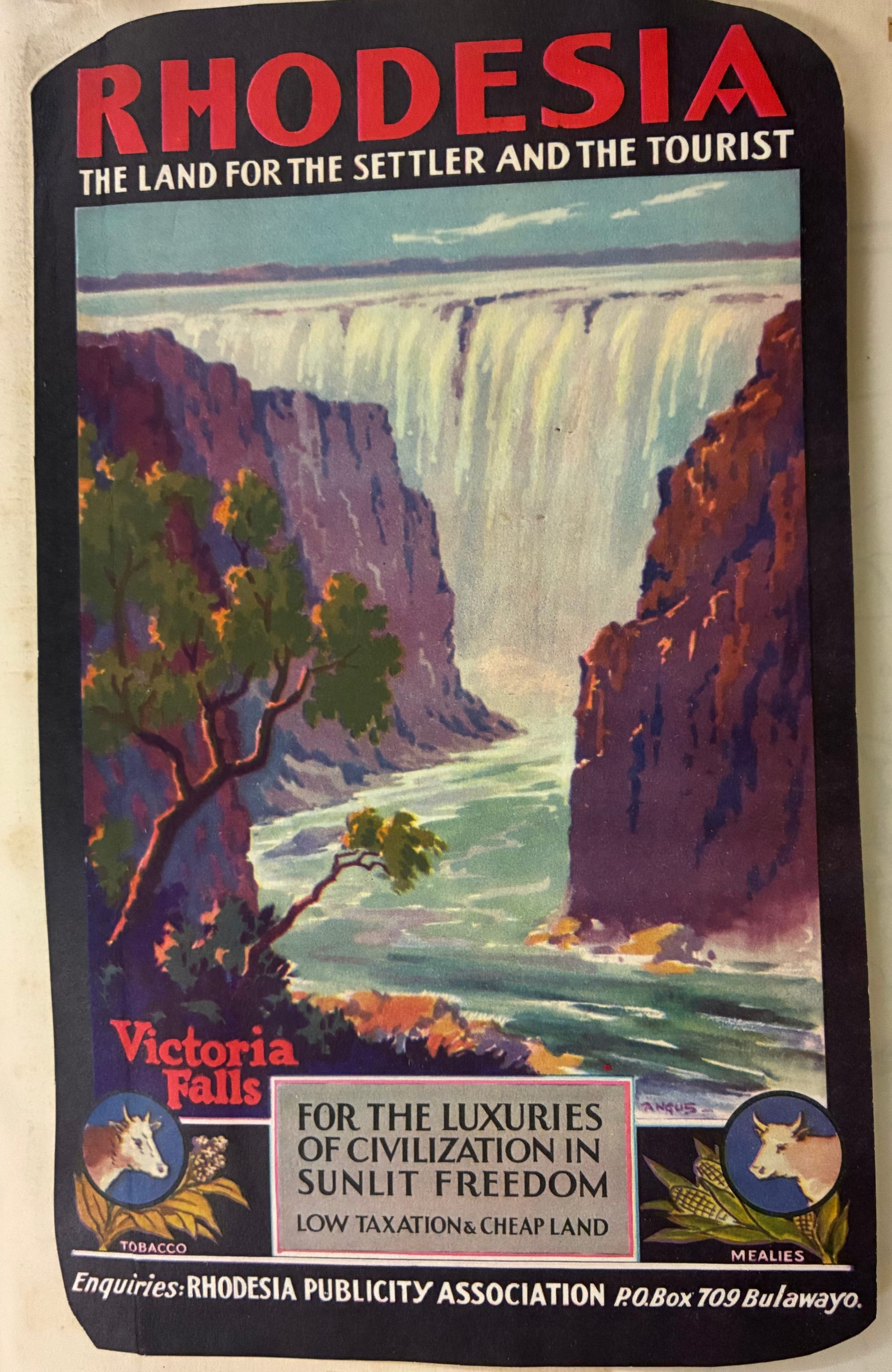
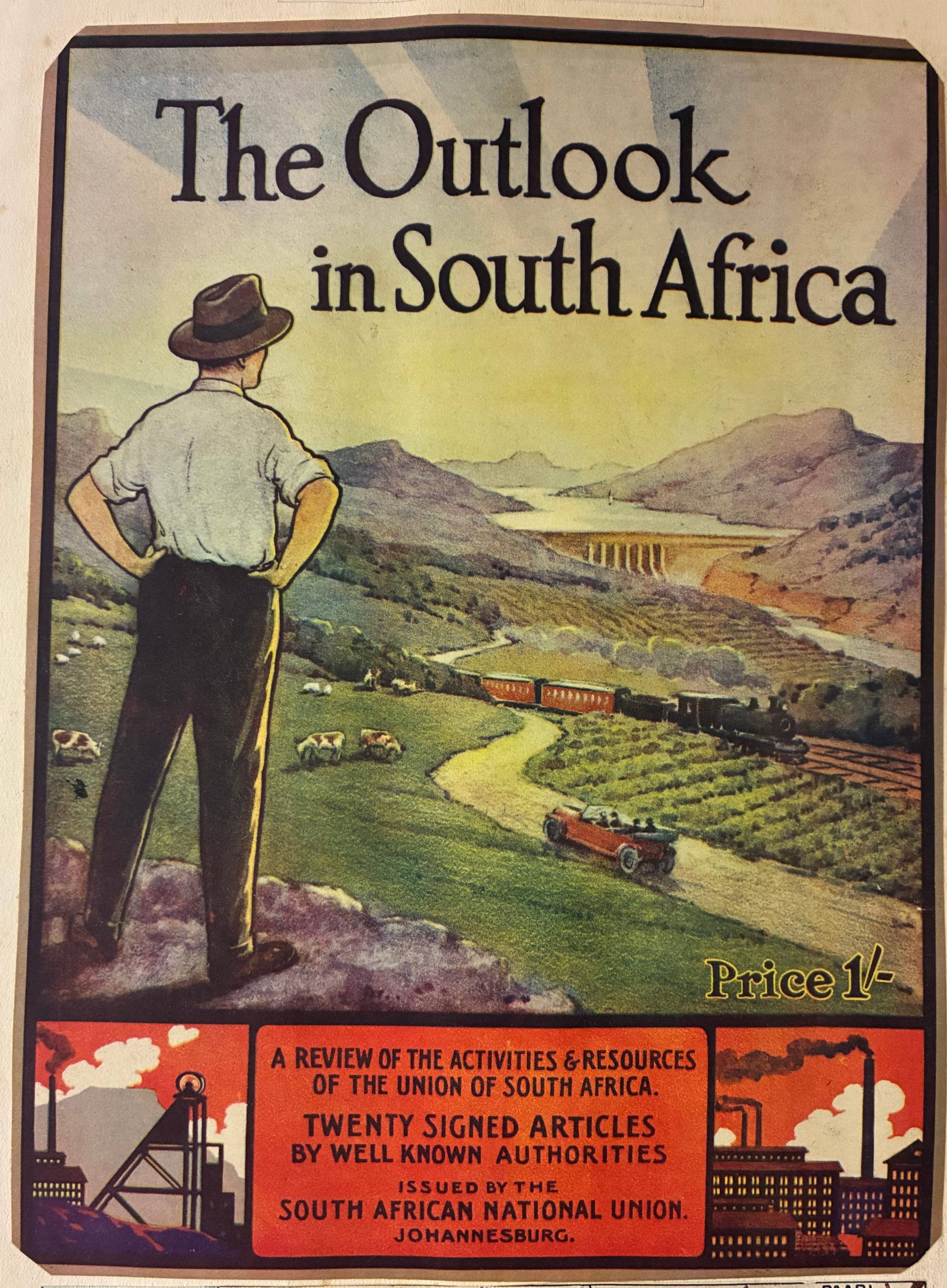
Pamphlets collected by Captain Horton (RCS/RCMS 429)
This album was compiled by Le Gendre George William Horton (later Horton-Fawkes) (1892-1982), one of the three tour directors. Though not directly organised by the RCS, the School Empire Tour Committee had close links with the Society. From 1936 Margaret ‘Maggie’ Best, the Honorary Secretary, had an office in the newly built RCS headquarters in Northumberland Avenue. The RCS archive holds the records of the School Empire Tour Committee (catalogued as RCS/ARCS/12/9), as well as records relating to the 1933 Canada tour (RCS/RCMS 237) and photographs collected by Maggie Best (RCS/Y3011FFF). A number of the original tour diaries and albums of press-cuttings were destroyed when the RCS headquarters were bombed in 1941.
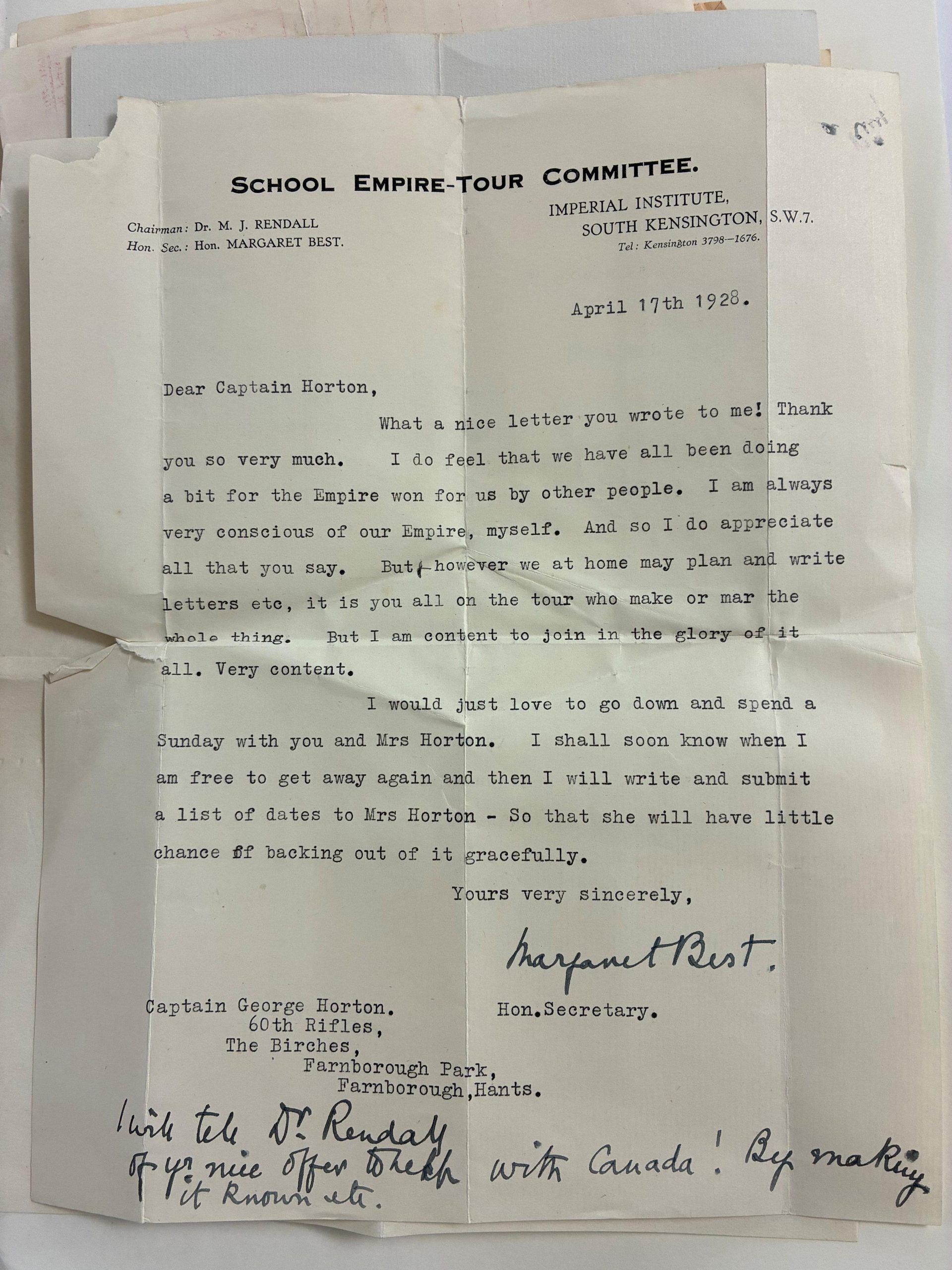
Horton’s scrapbook album fills some of the gap in the record, providing a personal perspective of the tour and its activities not reflected in the committee and organisational records. More than that, British public schools and the Oxbridge colleges had long been a training ground for colonial administrators. In this way, the scrapbook album and the wider initiative of the school tours are valuable sources for researchers investigating the interconnected themes of colonialism and public education, and emigration, class and gender in the empire.
For further reading on the School Empire Tours, see Sarah Winfield, ‘Travelling the Empire: the ‘School Empire Tours’ and their significance for conceptual understandings (1929-1939)’ (History of Education Review 40.1, 2011, pp. 81-95), and Donald H. Simpson, ‘The spirit of a lion and the appetite of a robin: Margaret Best and the School Empire Tours’ (RCS Library Notes no. 226, Apr.-Jun. 1978), pp. 1-7).