
Conservation in action: an album of medieval manuscript fragments with links to John Bagford
Post by Bryan Deighton, Conservator (Books & Paper) at Cambridge University Library
Background
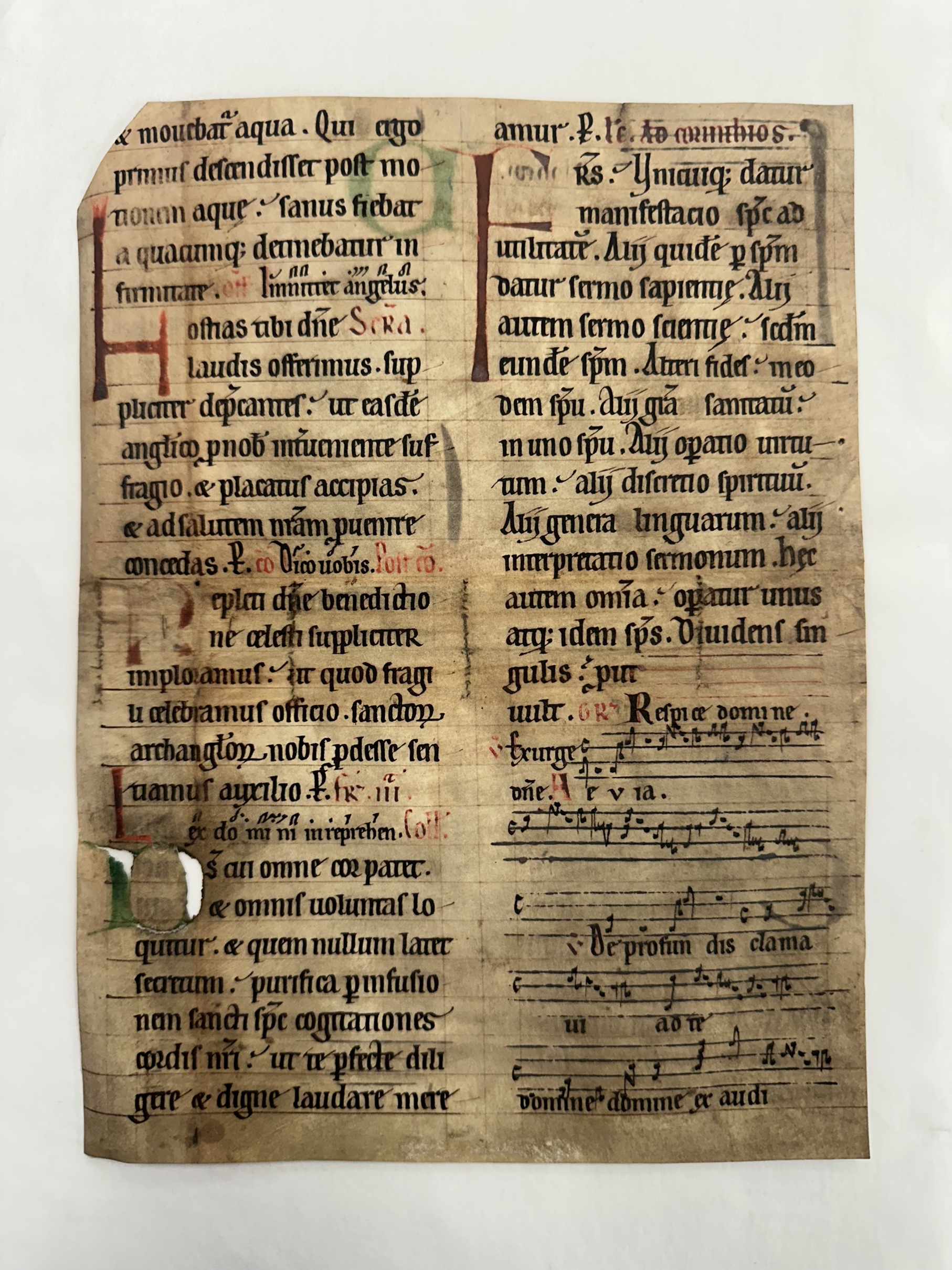
During 2025 I was given the opportunity to work on MS Add. 5963, a nineteenth century guard book containing sixty-eight medieval manuscript fragments, mainly dating from the 12th to 14th centuries, thanks to a grant from the National Manuscripts Conservation Trust. The fragments had mainly been recycled as bookbinding components and later collected to make, as the volume’s handwritten title states, a “Catalogue of Fragments from Ancient MSS on Vellum towards a history of writing”. The guard book was identified during a survey of the CUL fragment collection as requiring extensive conservation work to make it accessible at a time of increasing scholarly interest. It was unable to be produced safely in the reading room in its then condition, where the most minimal handling was causing further deterioration to the guard book and putting the fragments at further risk.
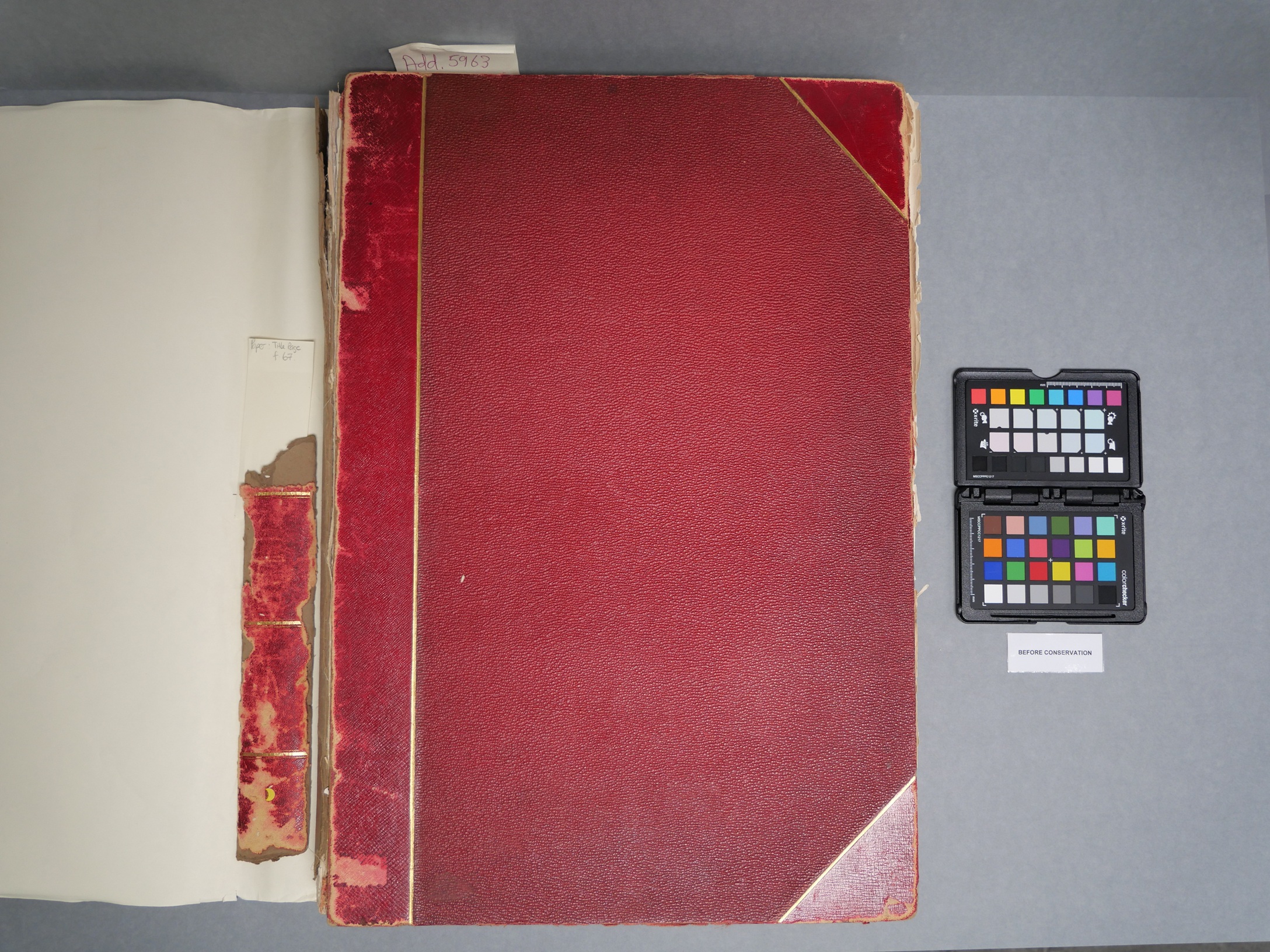
It holds significance as a curated collection of fragments with notable provenance. It was presented to the Library in 1916 by Francis Jenkinson (Librarian, 1889-1923) but adhered to the title page is a note by John Bagford (1650/51-1716), an important early collector and dealer of fragments. While the note does not necessarily prove that Bagford was involved in the creation of the collection, this volume, the identity and provenance of individual fragments within it, and its connections with antiquarian circles, has the potential to shed valuable light on practices of selecting and collecting fragments in the 18th and 19th centuries.
Previous interventions to try and address this deterioration included the addition of a cover and box with the insertion of many fragments into clear plastic sleeves. Unfortunately, the additional weight and bulk of the sleeves combined with a significant loss of mechanical strength of the paper which had become extremely brittle, contributed to ongoing disintegration.
Since the acidity of the paper leaves and the unsuitability of the binding were causing damage to the fragments, the proposed treatment was to create a new guard book to house the fragments and all the annotations that accompanied them. This treatment provided me with the opportunity to enhance some conservation techniques in areas that I had limited exposure to, developing my practical skills and experience.
Treatment
The original guard book was first photographed and then disbound page by page. The fragments and all written annotations were removed to allow identification of those requiring treatment and carefully stored in temporary wrappers to avoid any disassociation.
The fragments that had been adhered directly to the pages of the guard book with animal glue or using cloth guards were removed using moisture and a spatula to release them. This left a residue behind, so a wheat starch paste poultice was used to lift this away along the edge. Where any text or image was obscured, cotton buds lightly moistened with deionized water were gently rolled over the residues to remove them.
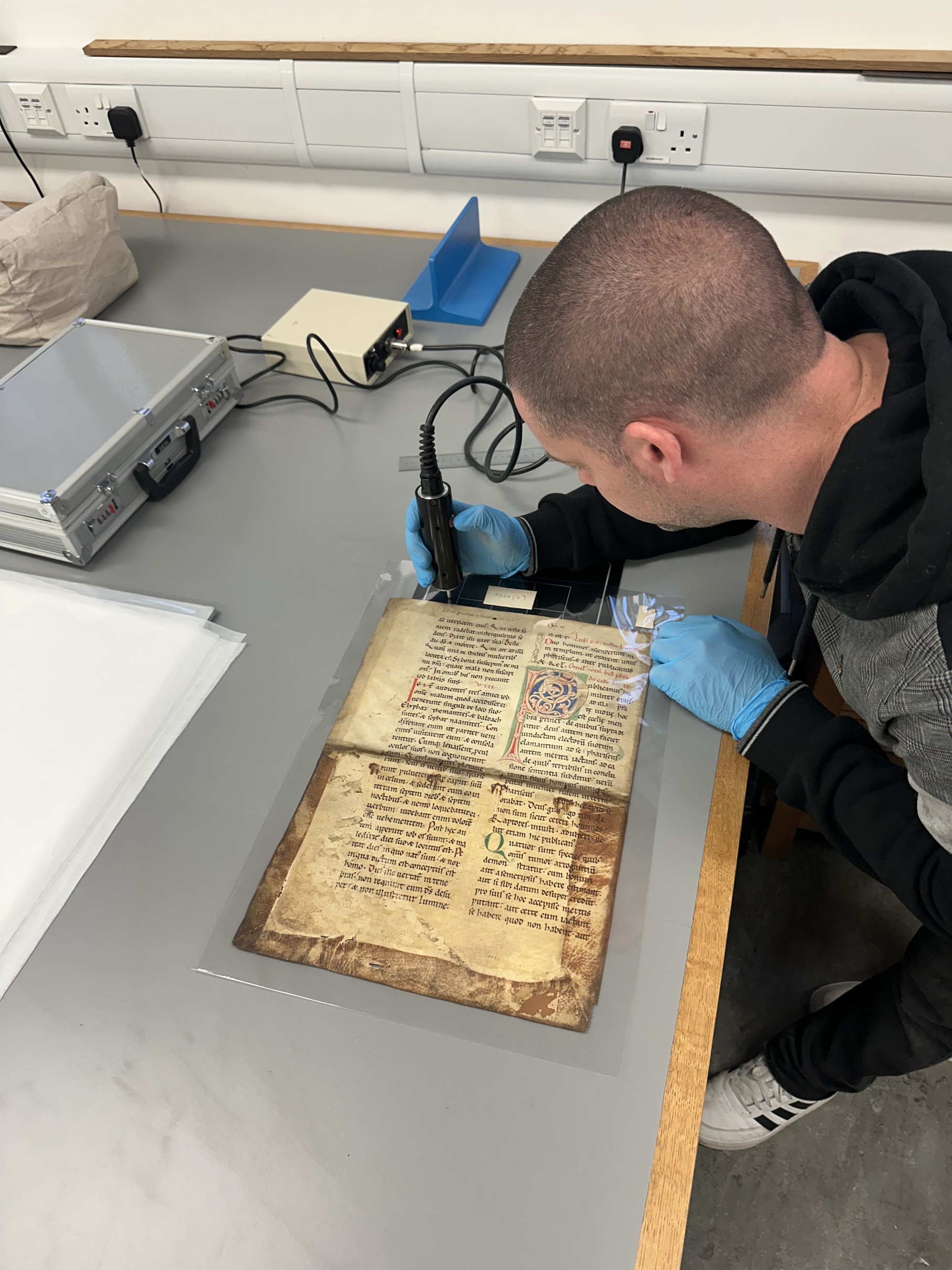
Six of the fragments needed humidification to ease out ingrained pleats, creases and folds. A controlled humidifier was used to relax the parchment before teasing out creases on the suction bed and reintroducing the original fold alignment with a bonefolder before drying under weight.
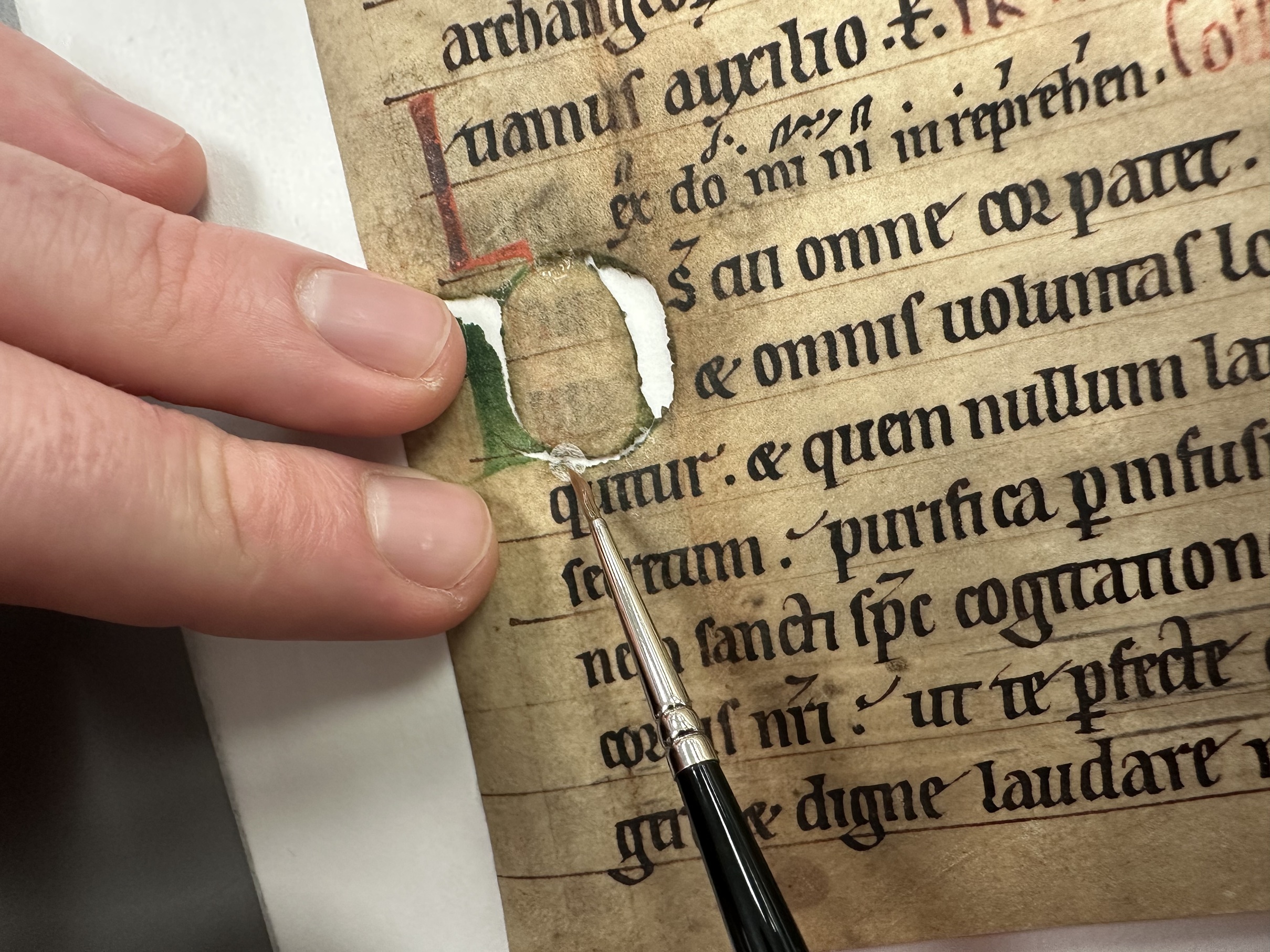
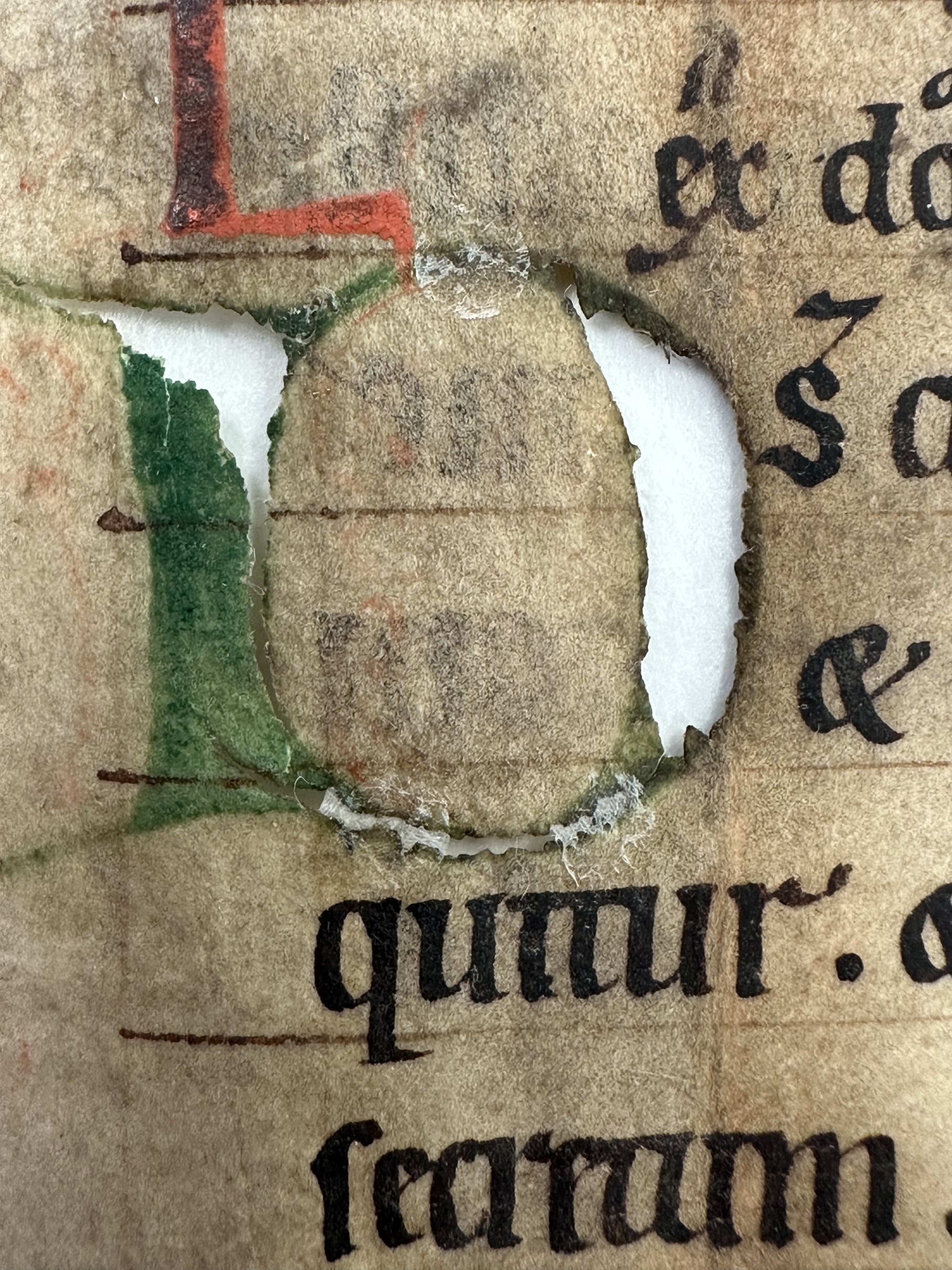
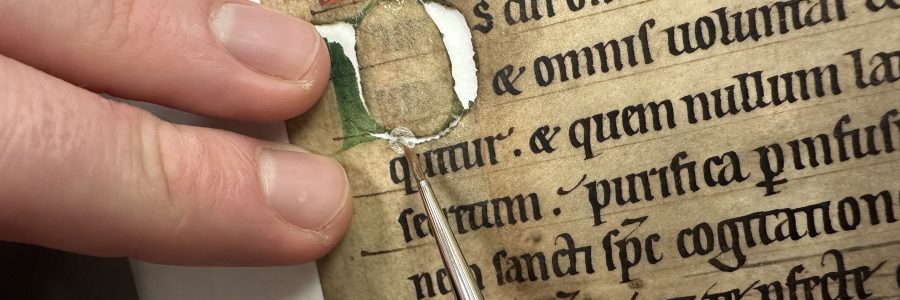
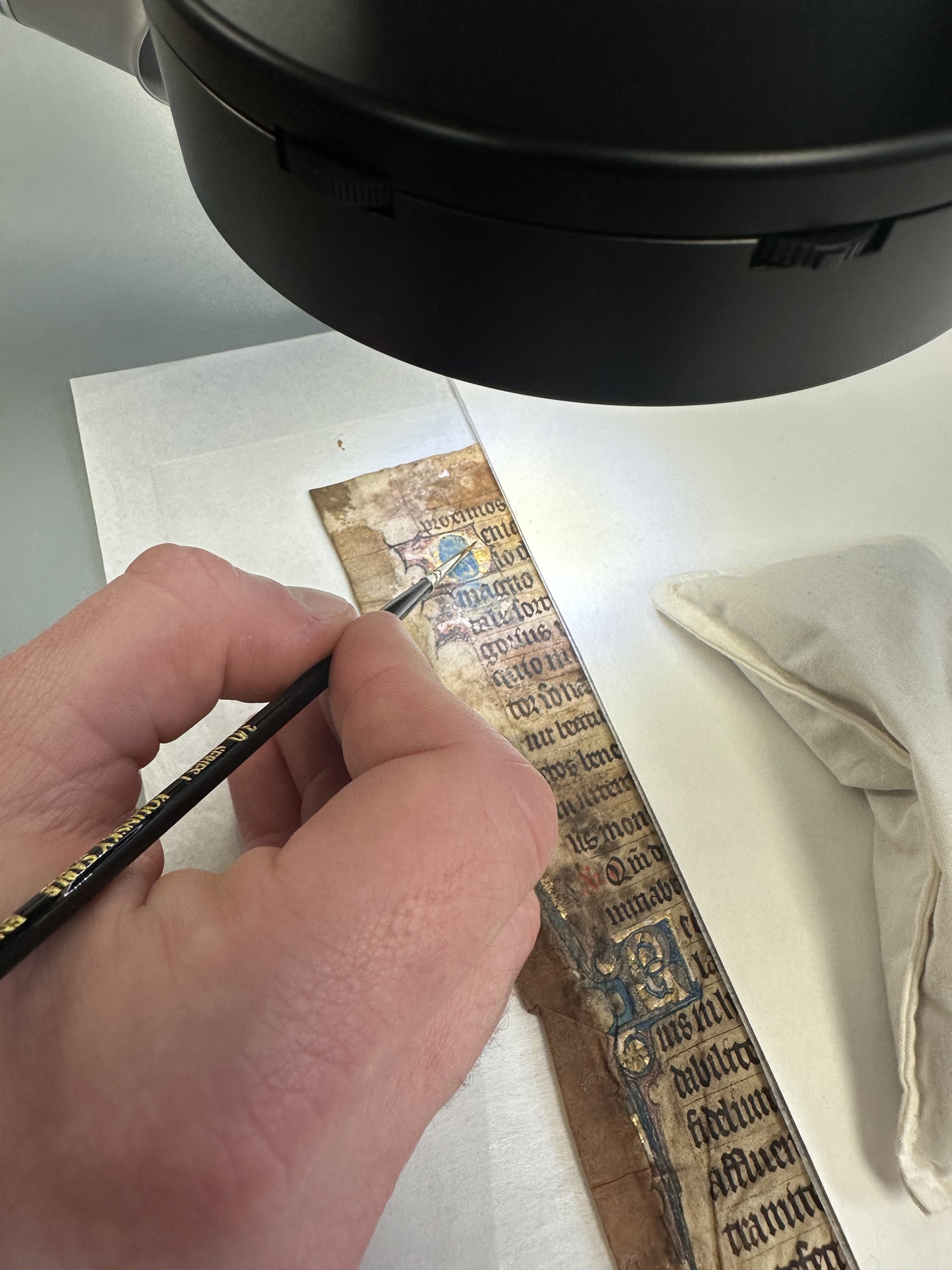
Two fragments needed pigment consolidation (36 and 38) this presented a valuable opportunity to gain additional practical experience in an area in which I had previously limited hands-on experience. Under a microscope and with guidance from Shaun Thompson (Conservation Manager), I used ethanol as a wetting agent followed by a solution of isinglass in deionised water to secure the loose pigment in place. This was only applied in areas with active loose, friable or flaking pigment, ensuring they remain adhered to their original surface.
Fragment 19 needed stabilisation with a delicate paper repair to hold in place a loose piece of parchment that was becoming detached where the ink had degraded. I cut paper discs and applied them with a small amount of wheat starch paste in three selected areas around the illumination to hold it in place.
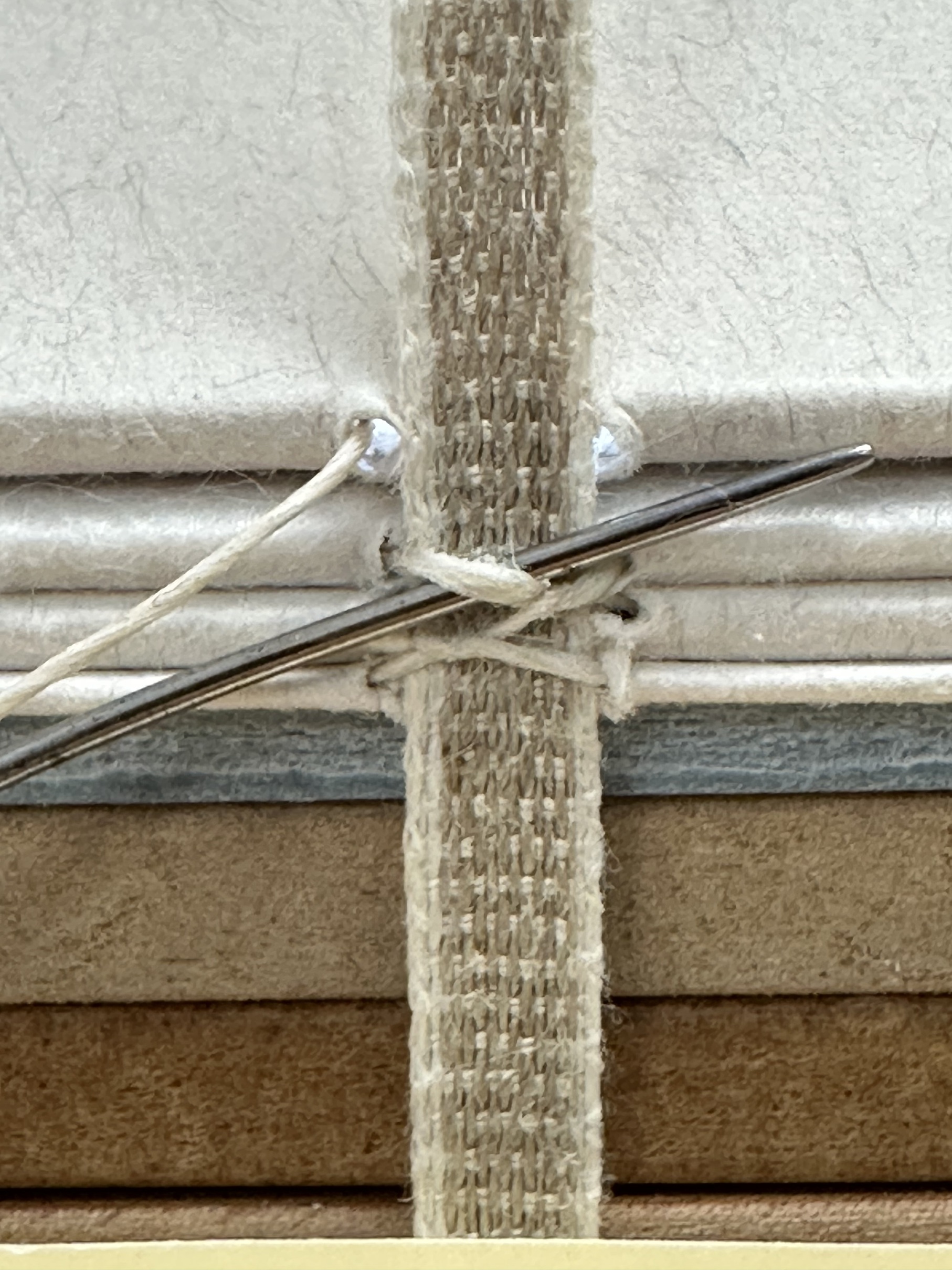
After all the fragments that needed it had been treated, they were encapsulated in polypropylene pockets. This rehousing system allowed all fragments, along with the text annotations that were on the original folios, to be arranged as they had been in the original binding. Spot welding was used to close the open edges, allowing the objects to breathe within their pockets and for easy access should they need to be removed for further study in the future. Following encapsulation, the fragments were sewn using tackets to a Melinex backing sheet with a welded Bondina strip hinge to create a “lifting leaf” for safer handling, with each gathering having a paper compensation guard.
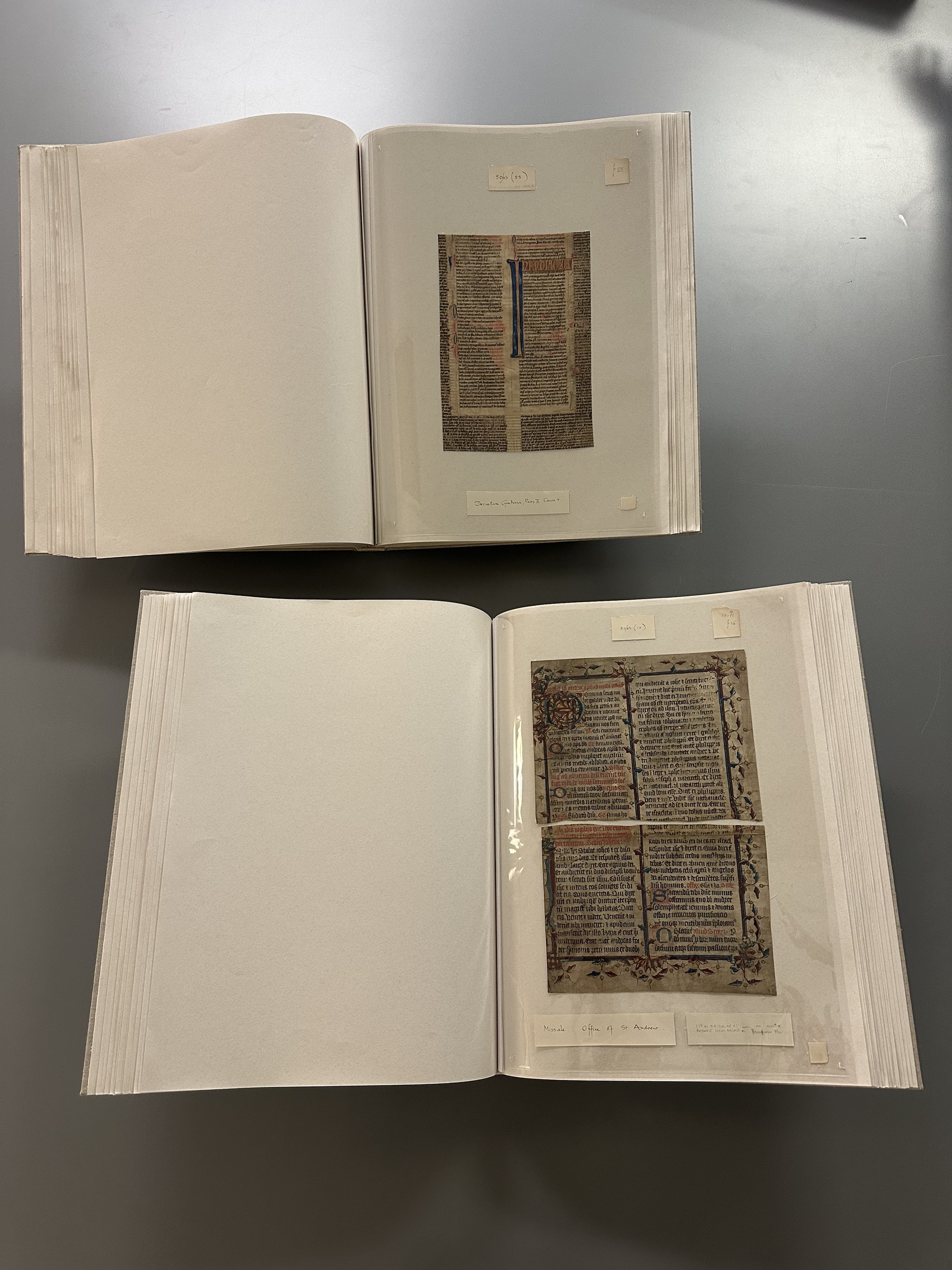
In consultation with Dr Suzanne Paul (Keeper of Rare Books and Early Manuscripts) and Dr James Freeman (Medieval Manuscripts Specialist) it was agreed that the fragments should be bound in two separate volumes. This was due to the significant size and weight of the gatherings before adding the additional binding materials which would make fetching and handling of a single volume problematic. Having two separate volumes reduces this risk significantly.
The new bookblocks were constructed using a German mould made paper, sewn on tapes with a French link stitch and back beaded endbands added for additional stability. Once this spine profile was set, the spine was lined with a strip of Japanese paper, then a strip of aerolinen, leaving an overhang to create hinges. 3-fold hollows were made off the book and then pasted to the spine. This allows it to arch away from the spine-folds as the book is opened.
The boards were made of archival quality board and lined with a goatskin parchment paper before covering in a crushed canvas cloth. Next the linen joints, sewing slips and end leaf stubs were pasted to the boards as the primary attachment. Separate pastedowns were added to stabilize the boards.
Finally, the encapsulated manuscript fragments were tacketed in place to the lifting sheets. Leather title labels were added to the spines of the two new guard books. Bespoke cloth-covered drop-spine boxes were made for each binding to ensure secure storage and safe handling of the guard books. The two volumes are now stored together and available for consultation in the Special Collections Reading Room.
I would like to extend my sincere thanks to the National Manuscripts Conservation Trust (NMCT) for their generous support in making this project possible. Their funding has enabled the conservation of this significant manuscript collection while also providing valuable opportunities for skills development, knowledge sharing, and professional growth. I am grateful to everyone involved in the project, including colleagues, advisors, and specialists whose expertise, collaboration, and encouragement contributed to its successful completion. Particular thanks go to all those who supported the conservation process, shared their knowledge, and helped ensure that this important collection is now preserved, accessible, and available for future research.
Lovely work, Liam! Could you say more about this device? “A controlled dehumidifier was used to relax the parchment…” I’m a paper conservator and also interested in controlled and localised humidification. (Was dehumidifier a typo?)
The rehousing system with poly pockets, lifting edges, and tackets is quite nice! Is there also a paper sheet/folio separating each pocket from its neighbors? What is its function?
Yes this was indeed a typo! Corrected.
Hi Grace, thank you for your interest. The parchment fragments that we flattened were treated in our department’s humidity chamber, this has a suction bed with a see-through lid over it with a pipe that releases a vapour into the chamber. This allows us to monitor and control the amount of moisture being added incrementally.
There is a paper folio between each fragment, the function of this is to allow the pages to be turned safely and easily without any flexing or strain potentially being placed on the fragments.